The Method and Madness of Maachhpatti
A photo essay
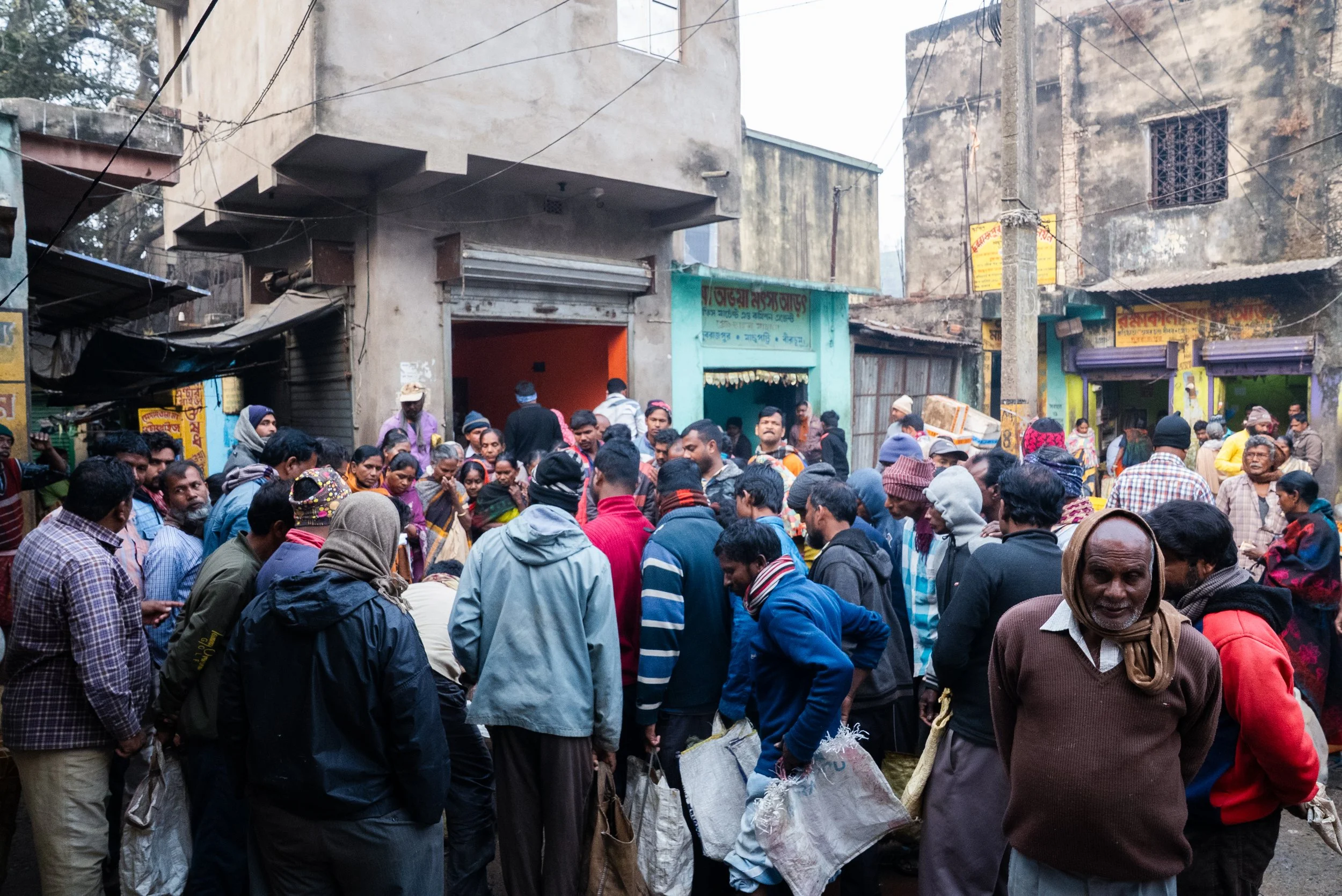
At the crack of dawn, trucks and motorcycles loaded with fishing catch are already lining up outside the narrow alleys leading into maachhpatti - or the fishmonger’s square - in Dubrajpur, a small but rapidly urbanising town in Birbhum District of West Bengal. The hum of activity is the precursor to the chaos that will soon unfold as the morning brings together fishermen, fishmongers, agents and customers for a bustling fish auction.
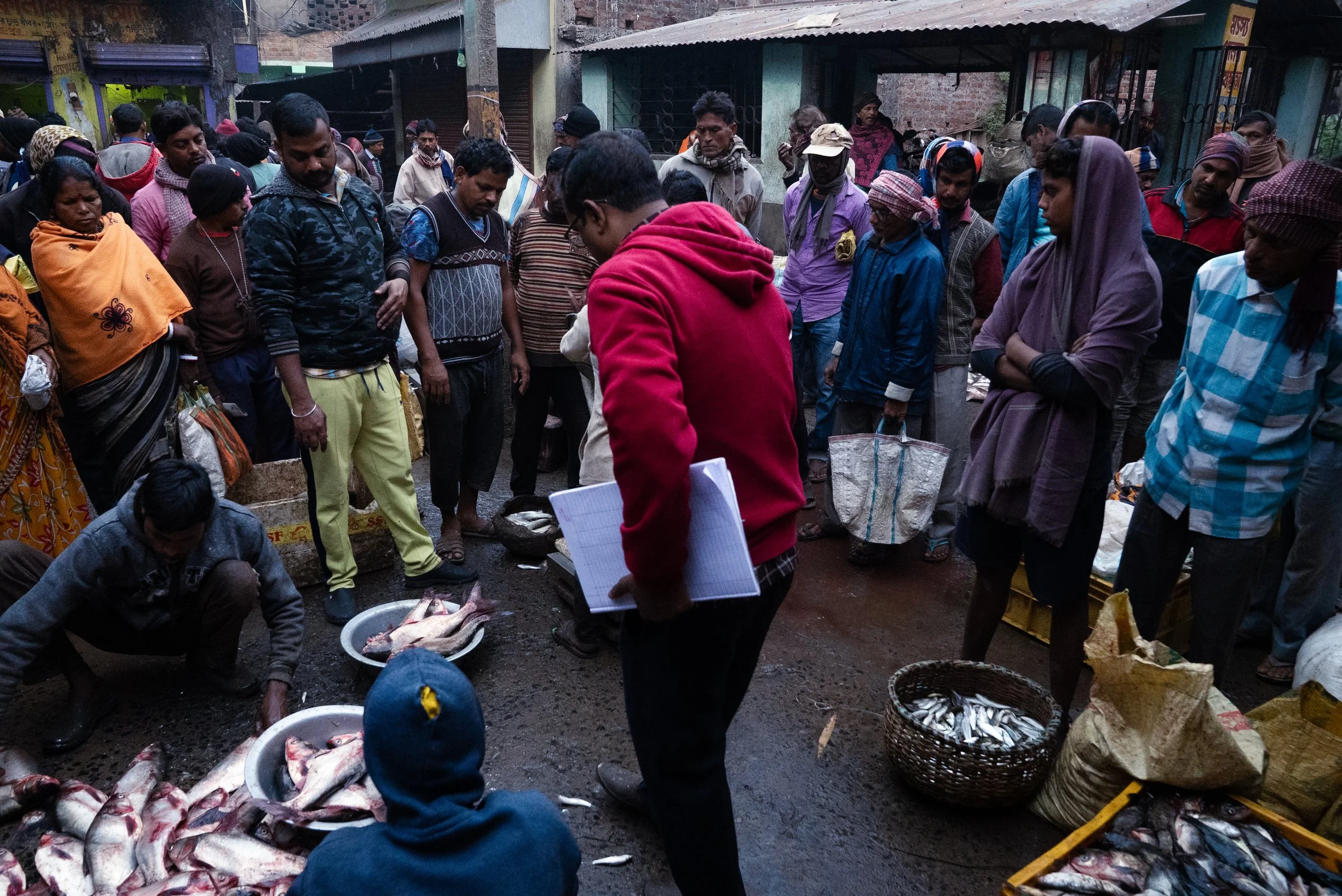
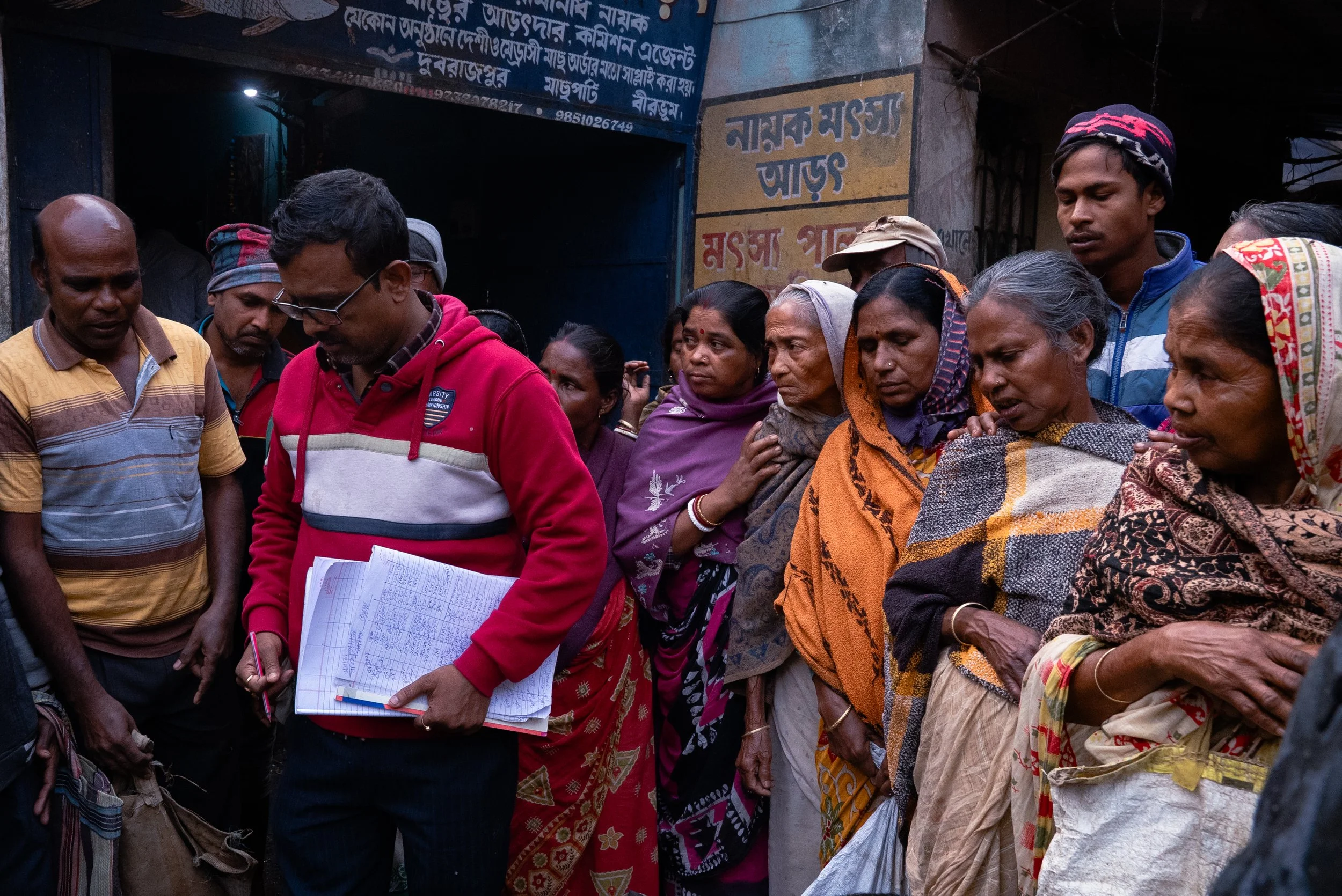
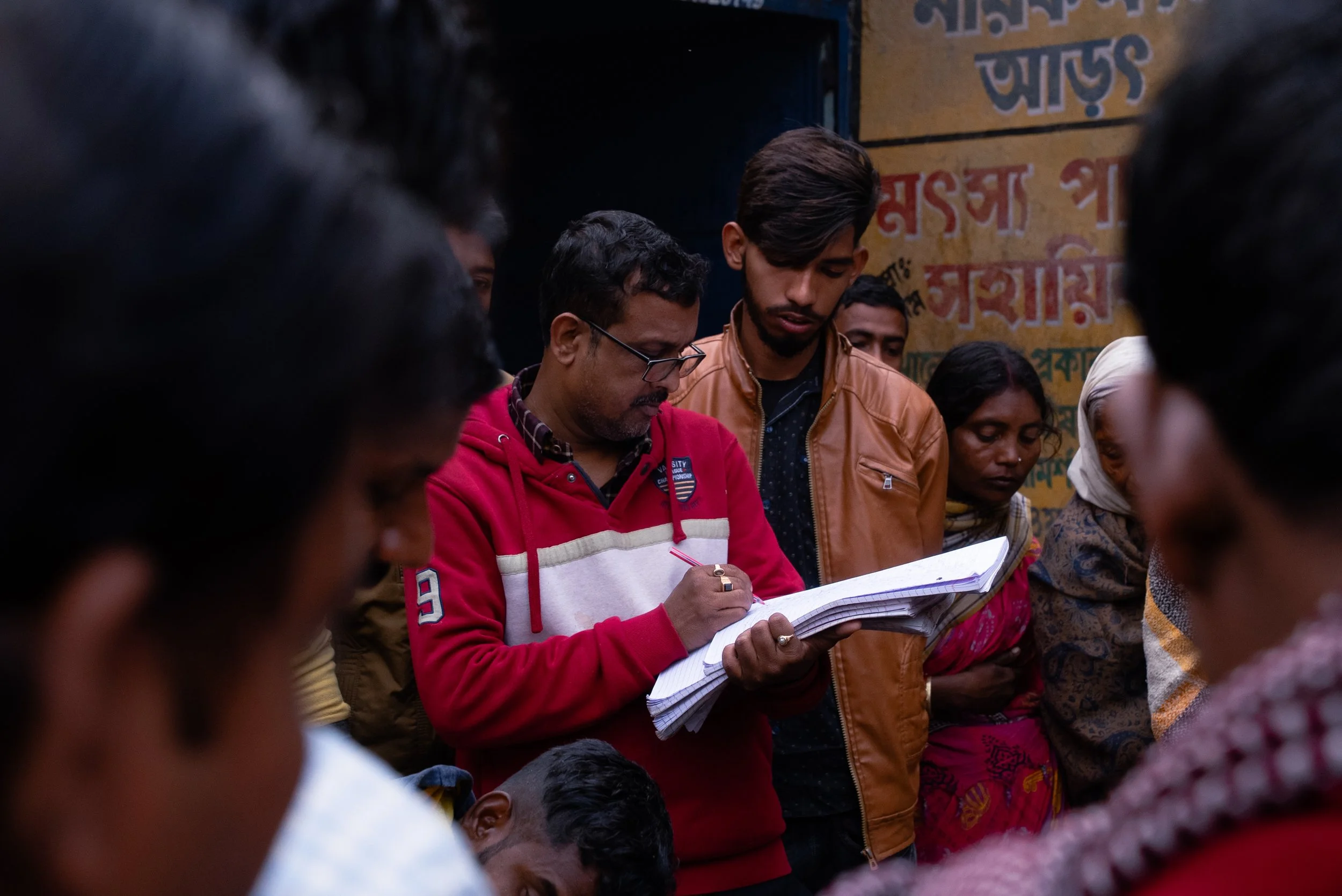
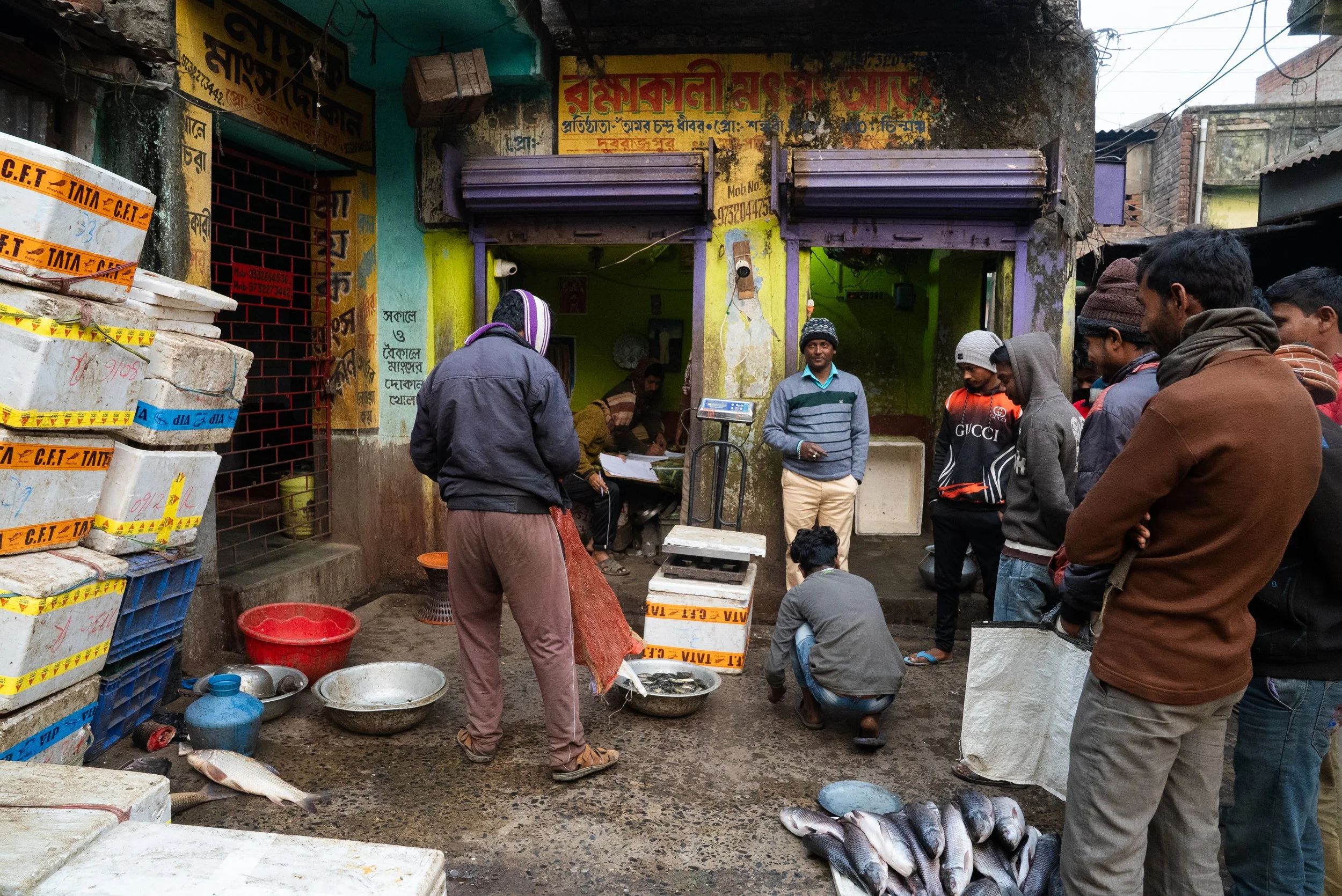
Ram Bikram Nayak, or Bappa da, as he is known around the block, is the co-owner and main commission agent of the square’s most popular auction or aarat - Nayak Matsya Aarat, as indicated in big letters by the signboard above the shop space behind where he stands, ready with a notebook and pen as helpers start unloading crates and tubs of fish, many still flapping their tails, on the ground beside a well-worn weighing scale. He is a lawyer, practising at Dubrajpur Court, but having inherited the fish business from his uncle, for a couple of hours every morning he turns aaratdar or commision agent. There’s money in running the fish auction.
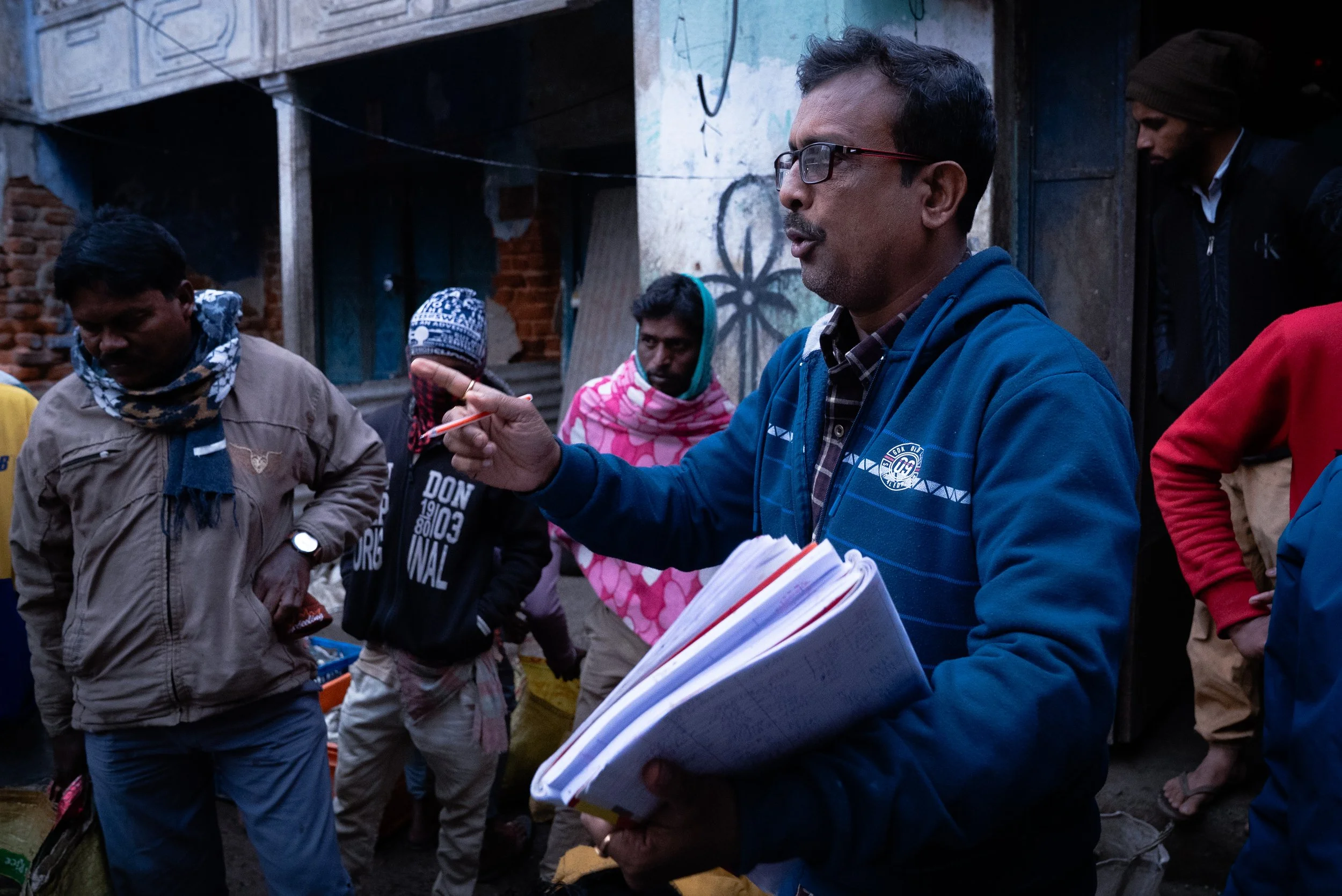
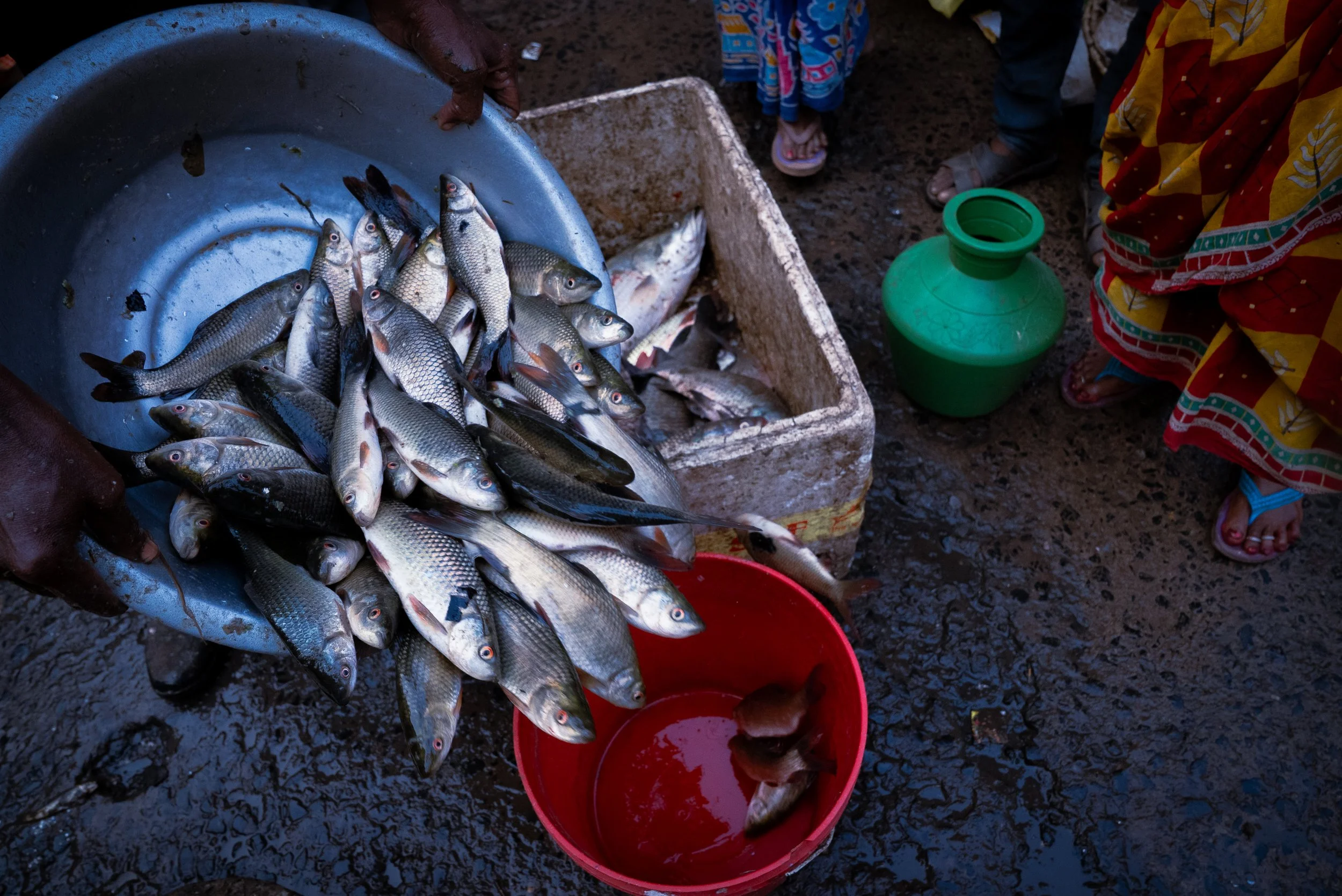
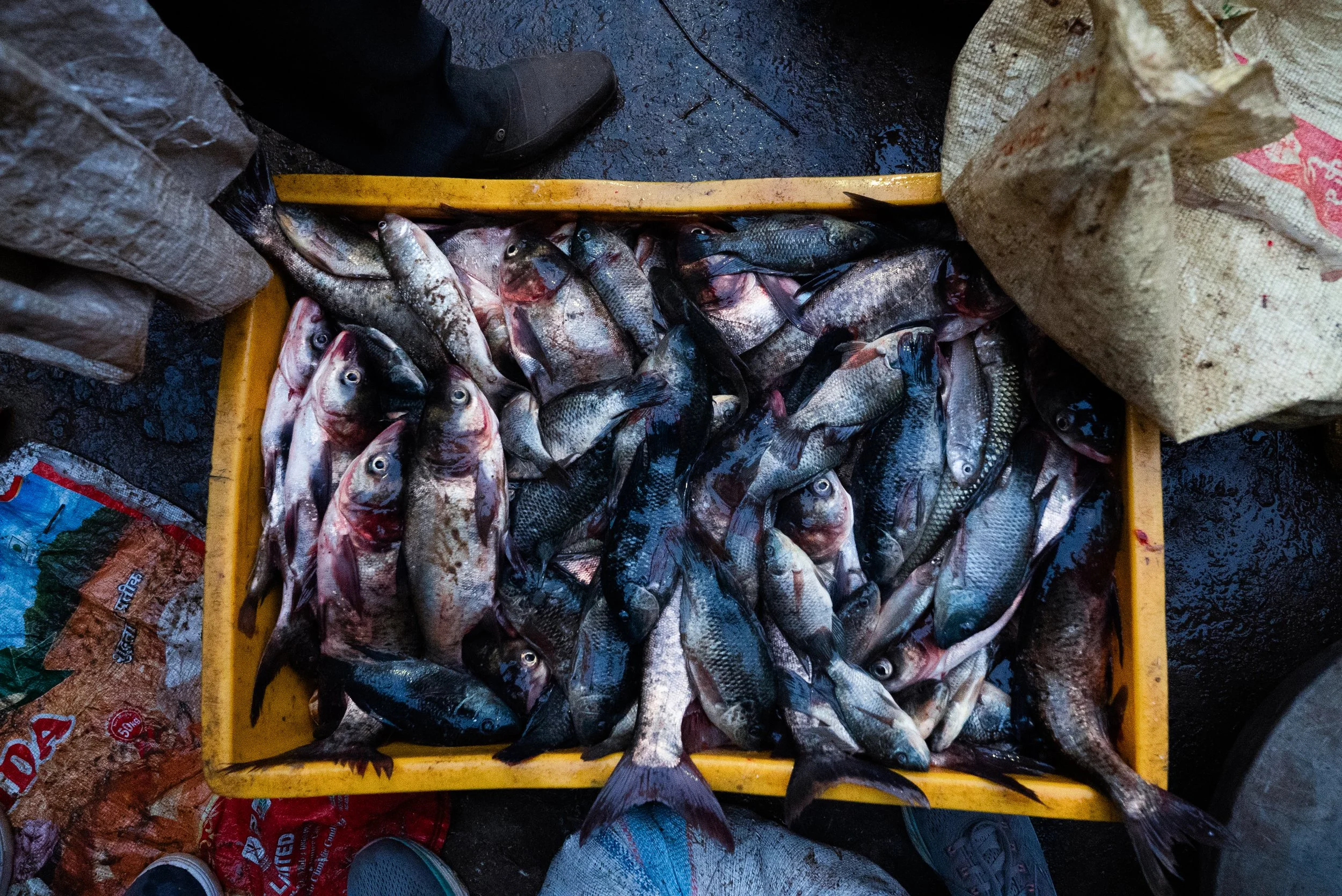
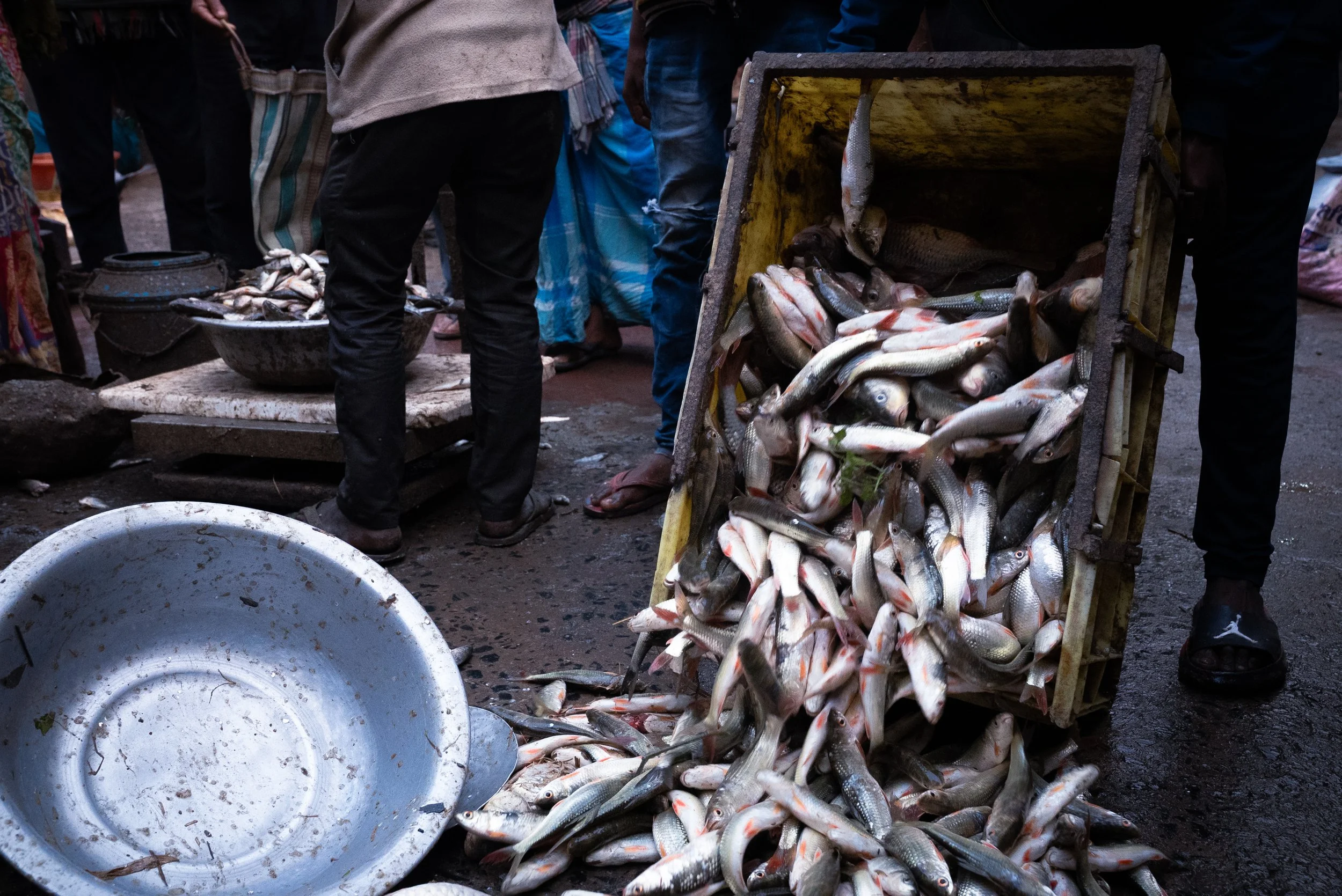
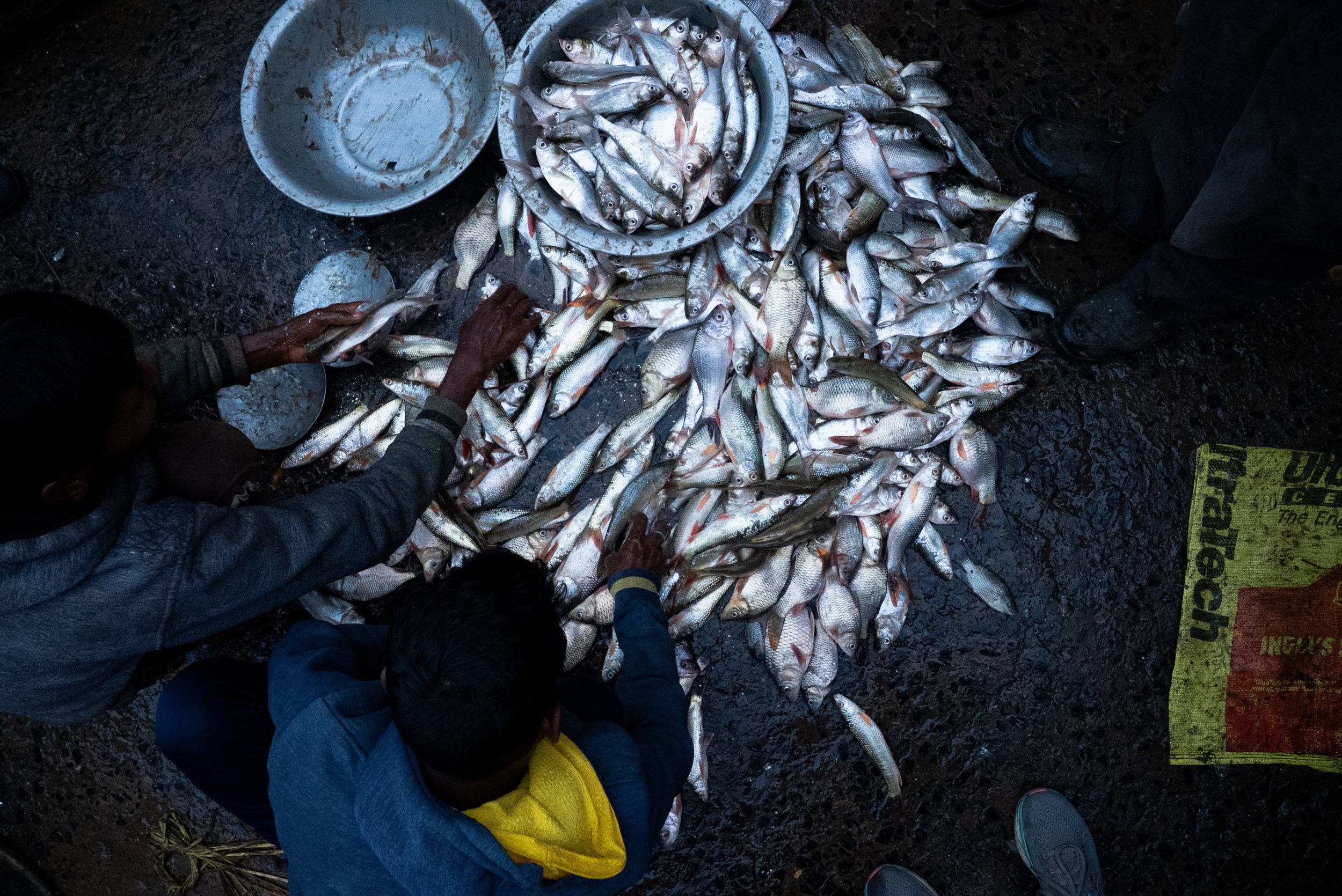
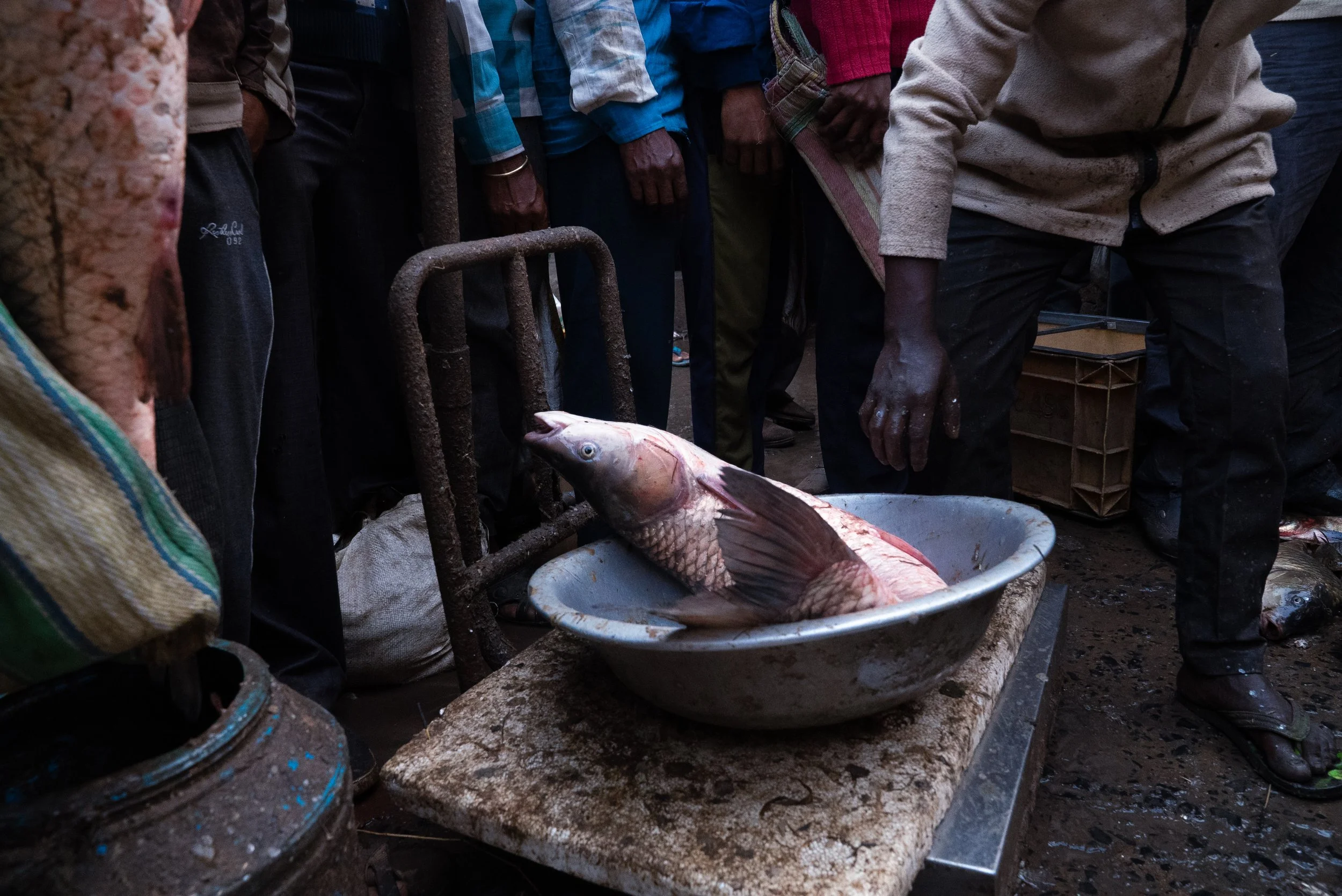
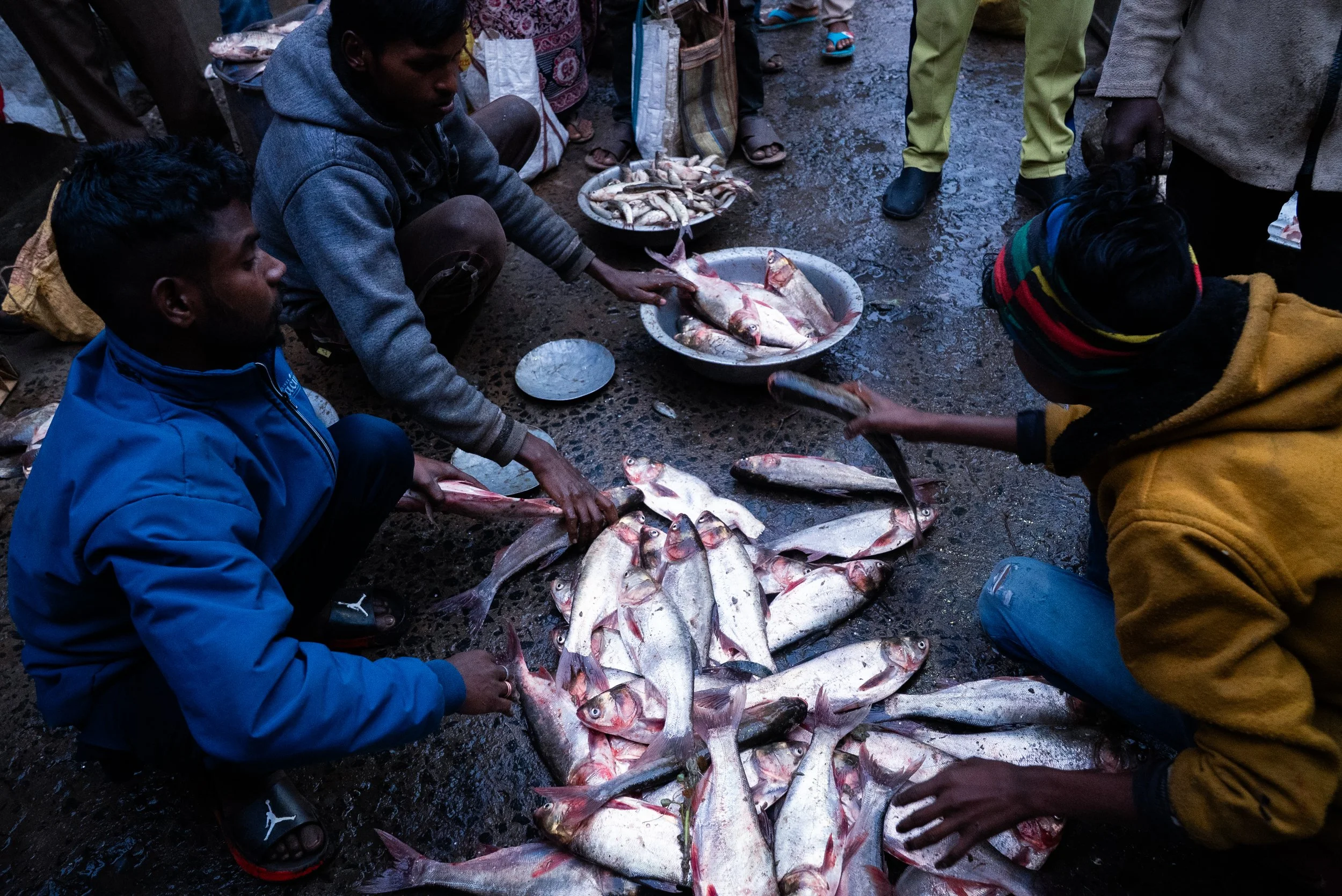
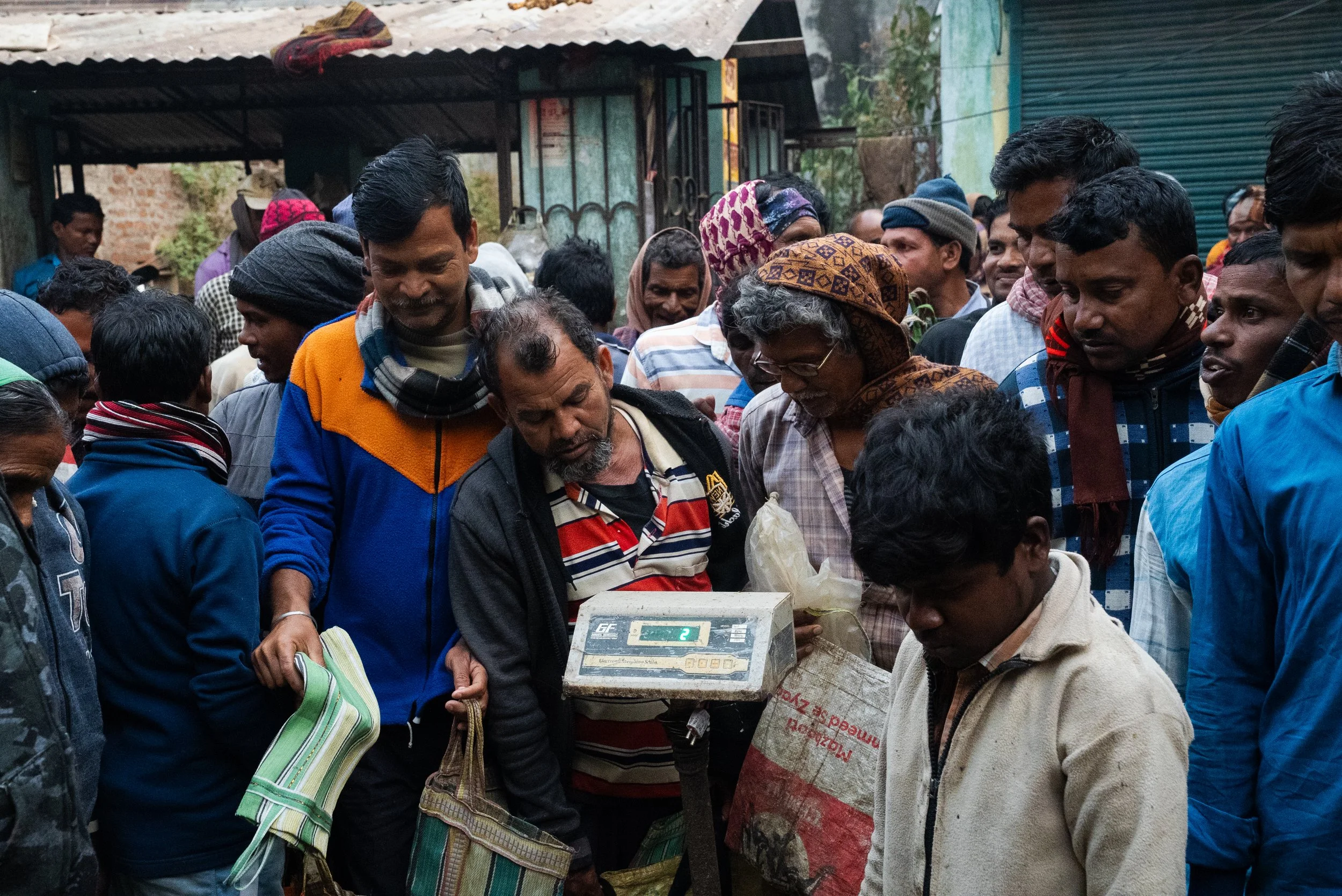
Fish of all kinds, shapes and sizes splatter and slide out onto the ground as Bappa da calls out the rates in a commanding voice over the chatter of the gathered crowd, barely pausing for breath. Locally available fish dominate the sale - Rui, Catla, Mirik, and occasional loads of shrimp. The commission agents know most regular buyers by name and the crowd swells as the auction proceeds like clockwork. Bucketloads of fish are swiftly separated, weighed and dropped into bags of eager buyers, making space for the next batch. This astonishing speed is largely maintained with the help of seasoned assistants who are tasked with gathering, weighing and handing over the fish without falling out of step with the bids.
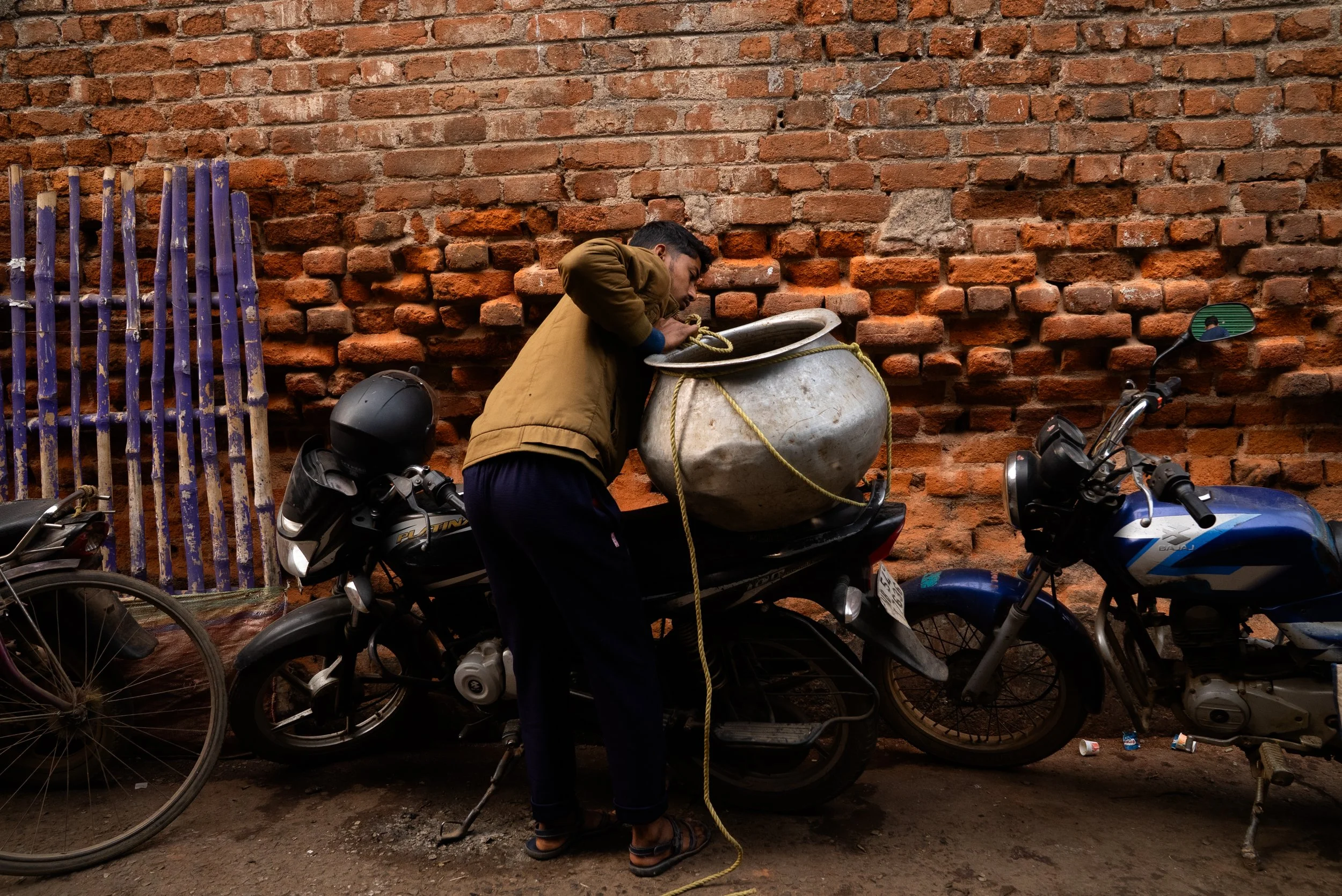
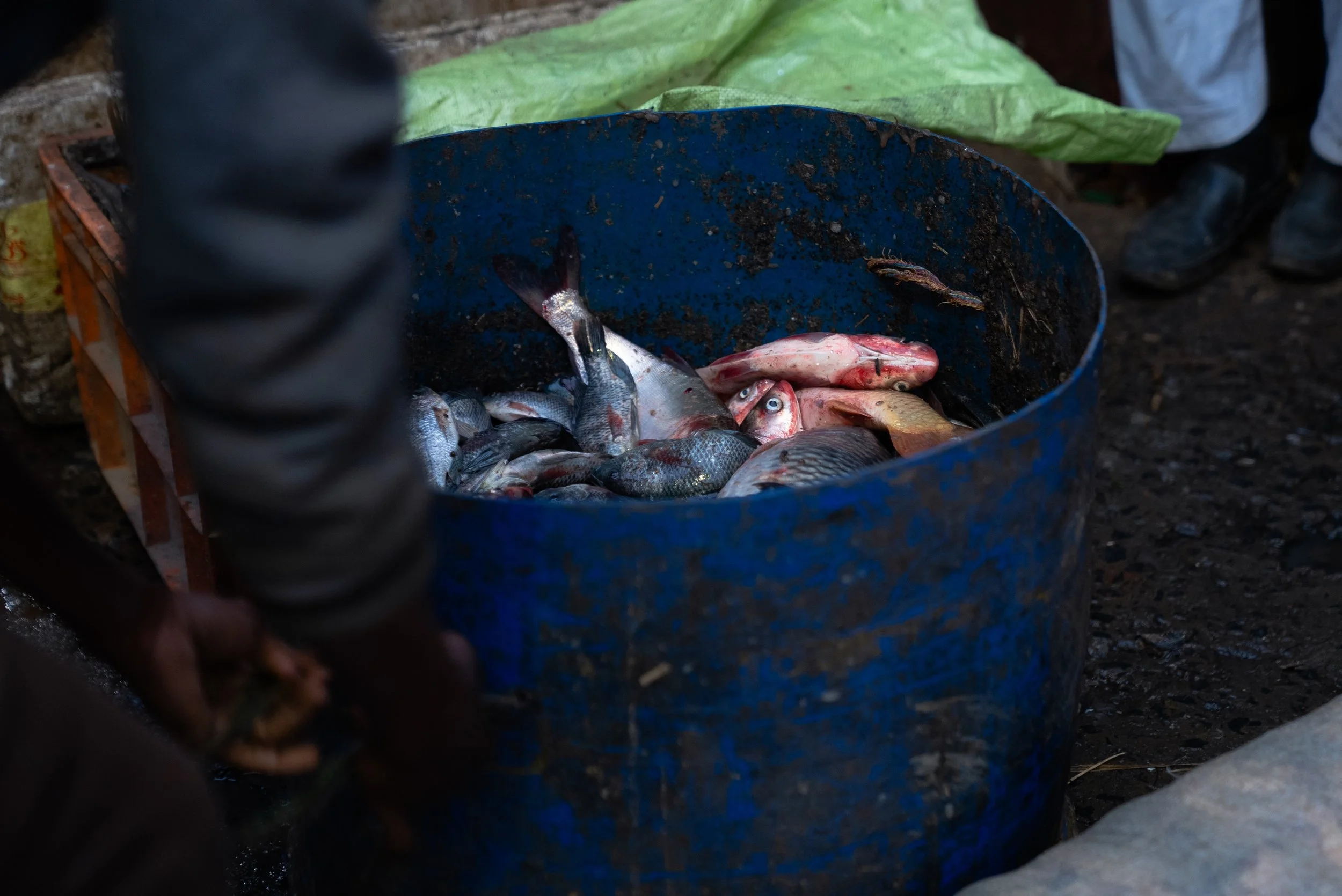
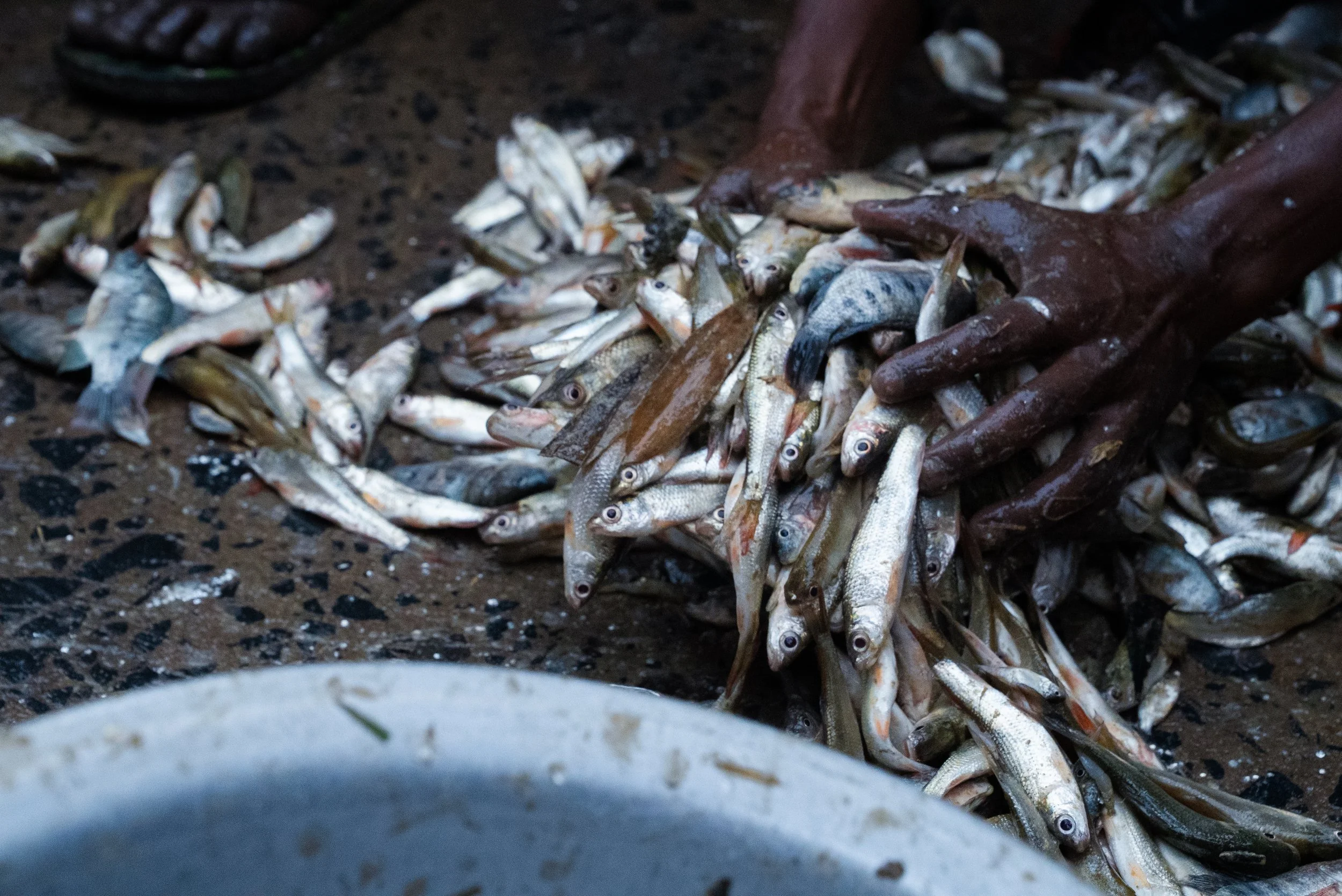
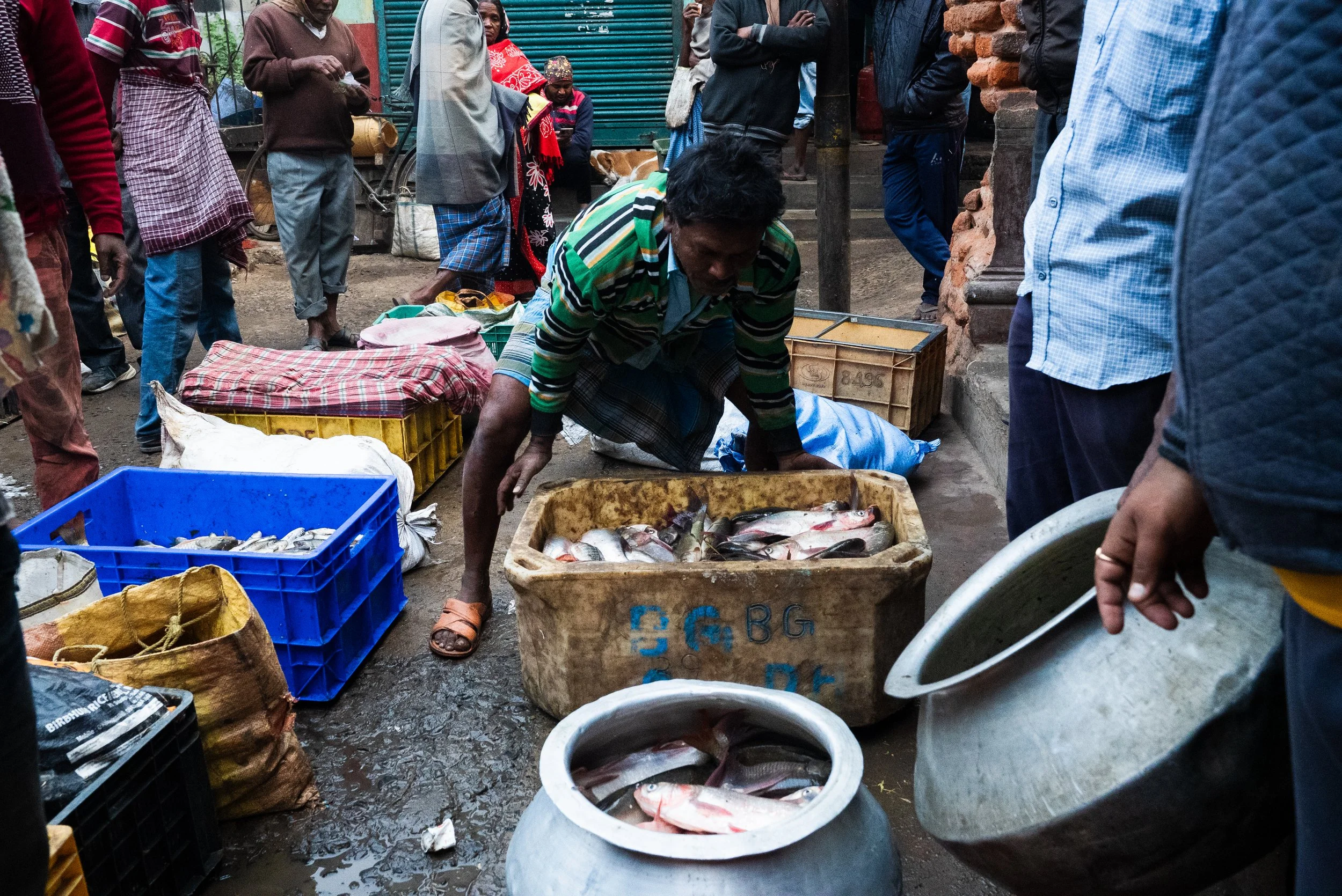
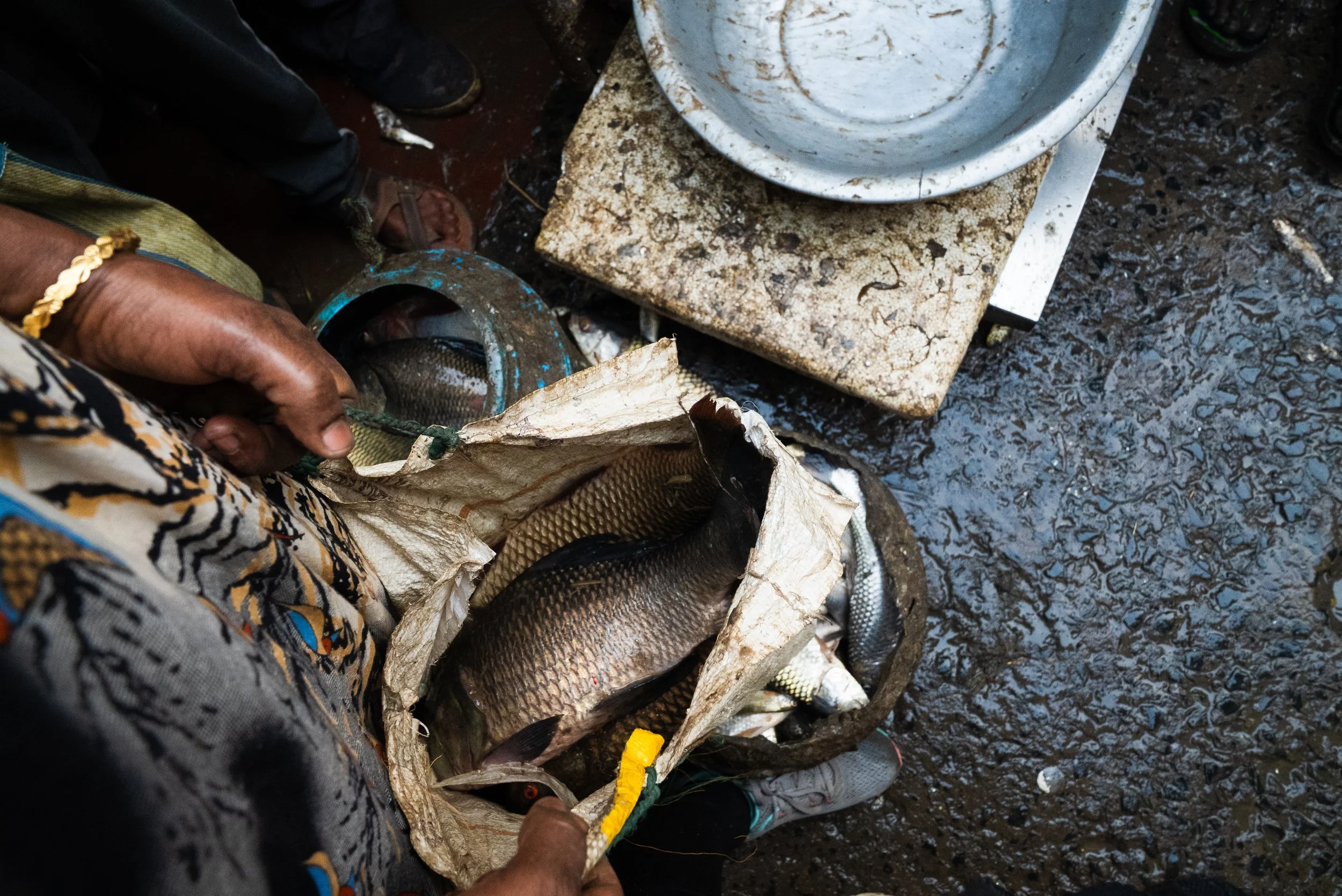
Containers holding fresh catch are unloaded and brought near the auction area for sorting
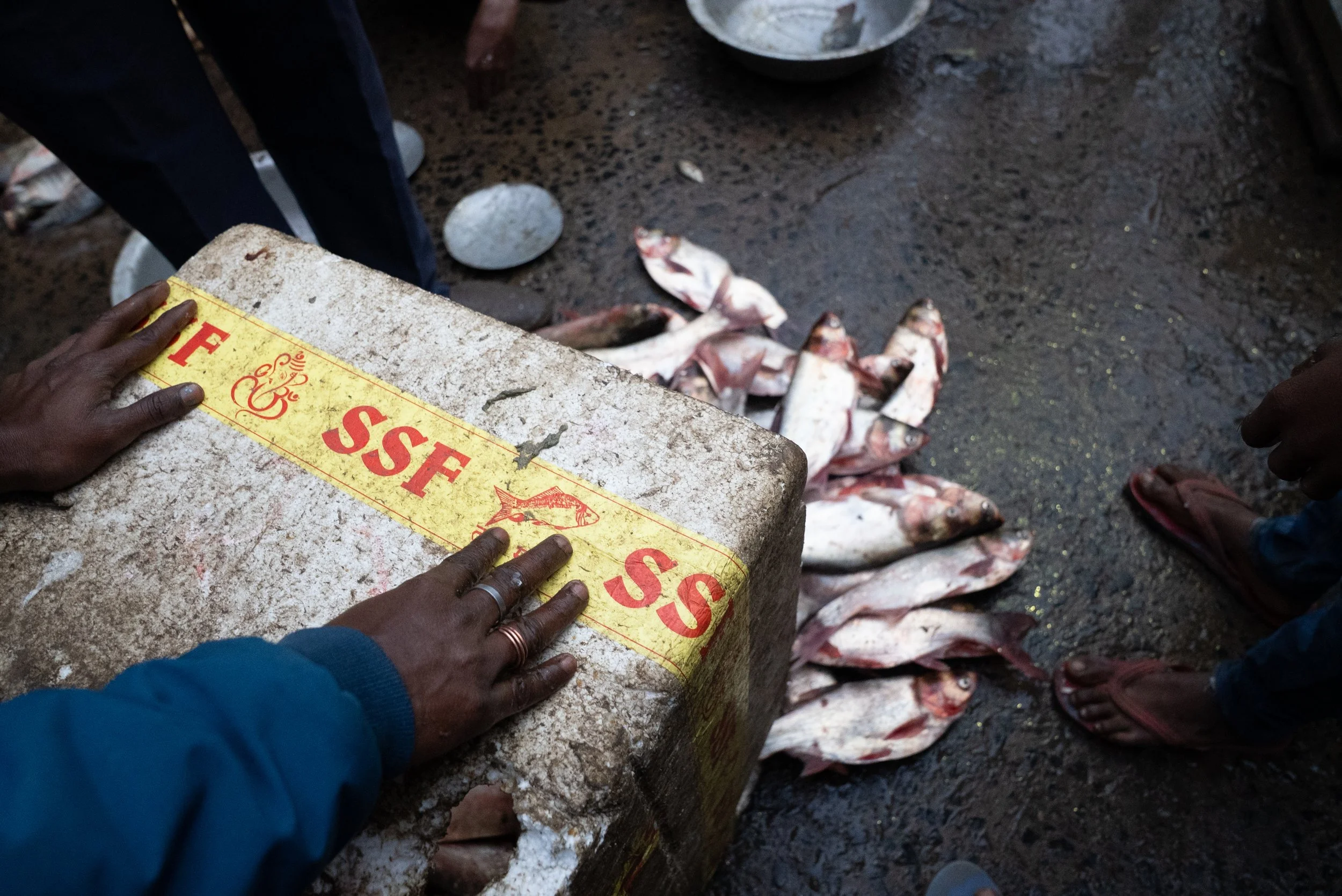
Fish are poured into the ground and sorted by hand as the crowd of buyers places their bids
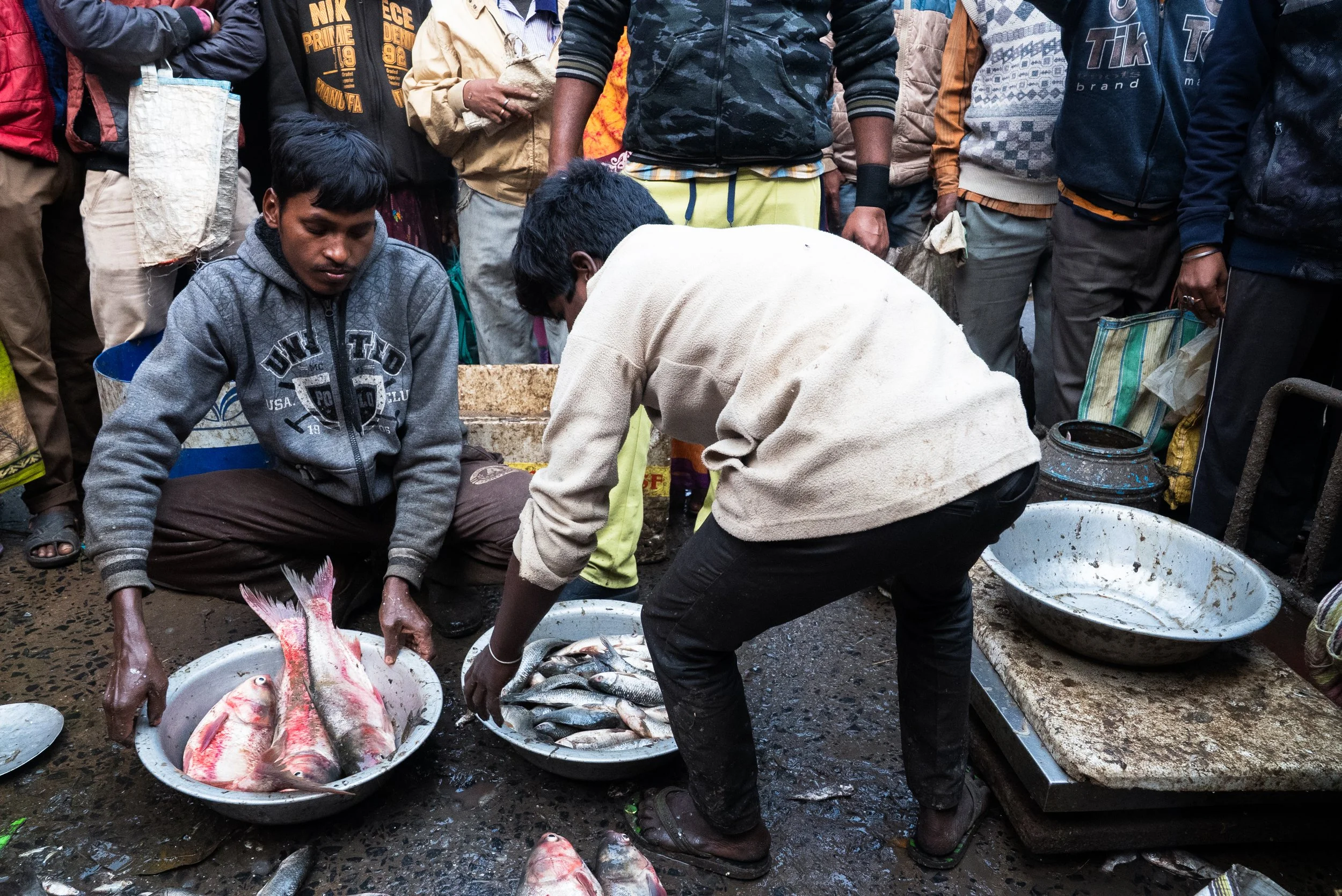
Fish is weighed before being handed over to the highest bidders
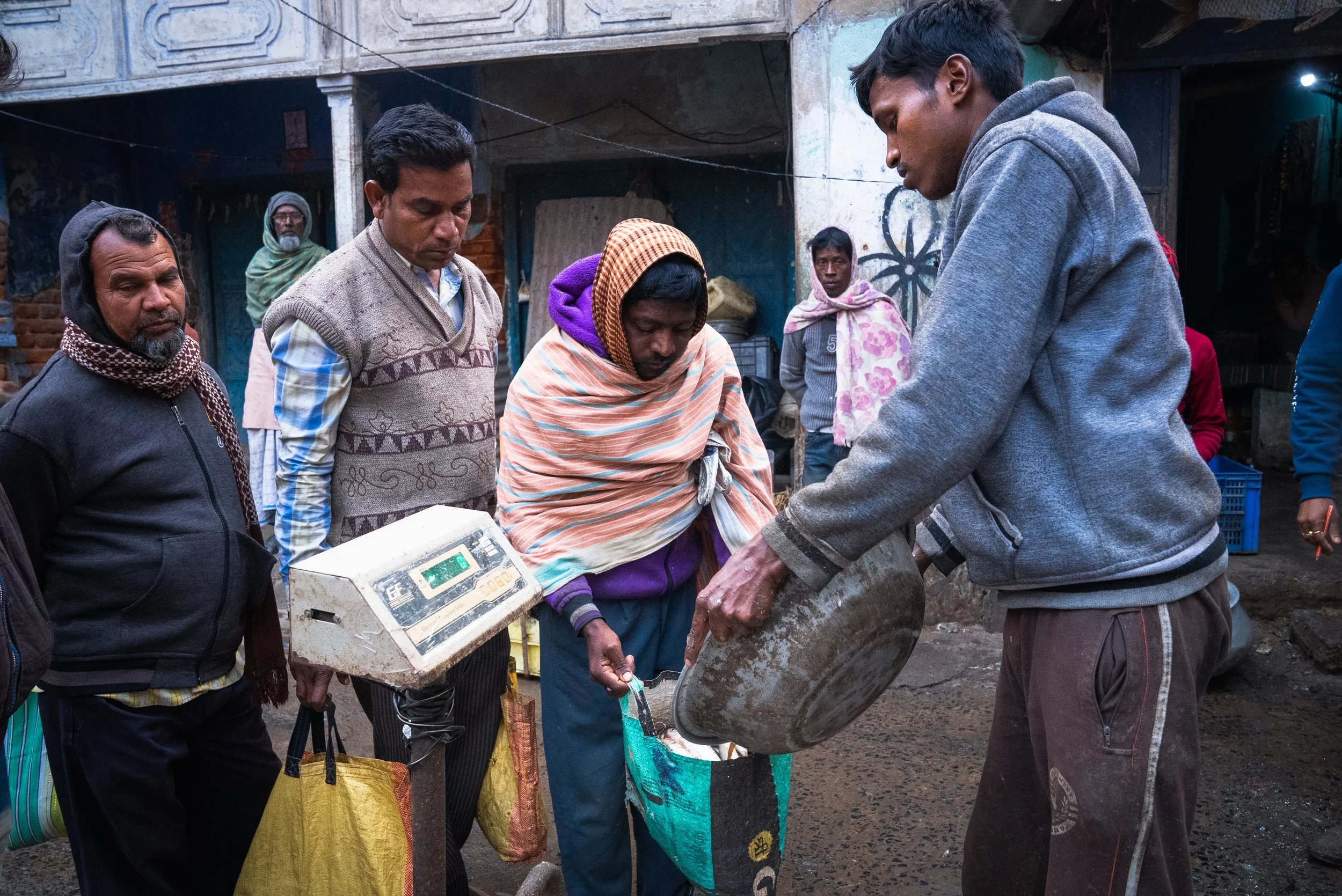
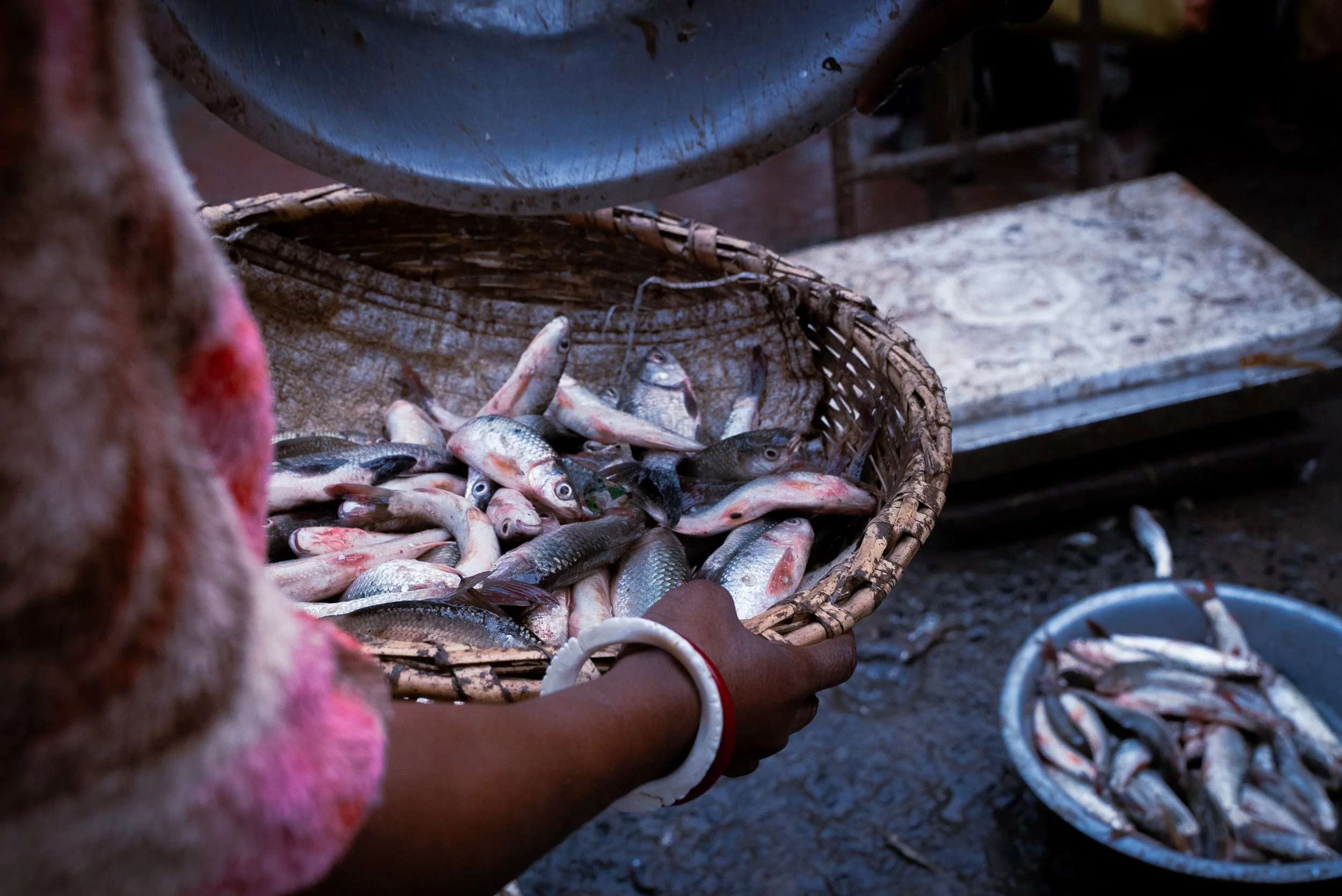
Fish is dropped into the bags of waiting buyers
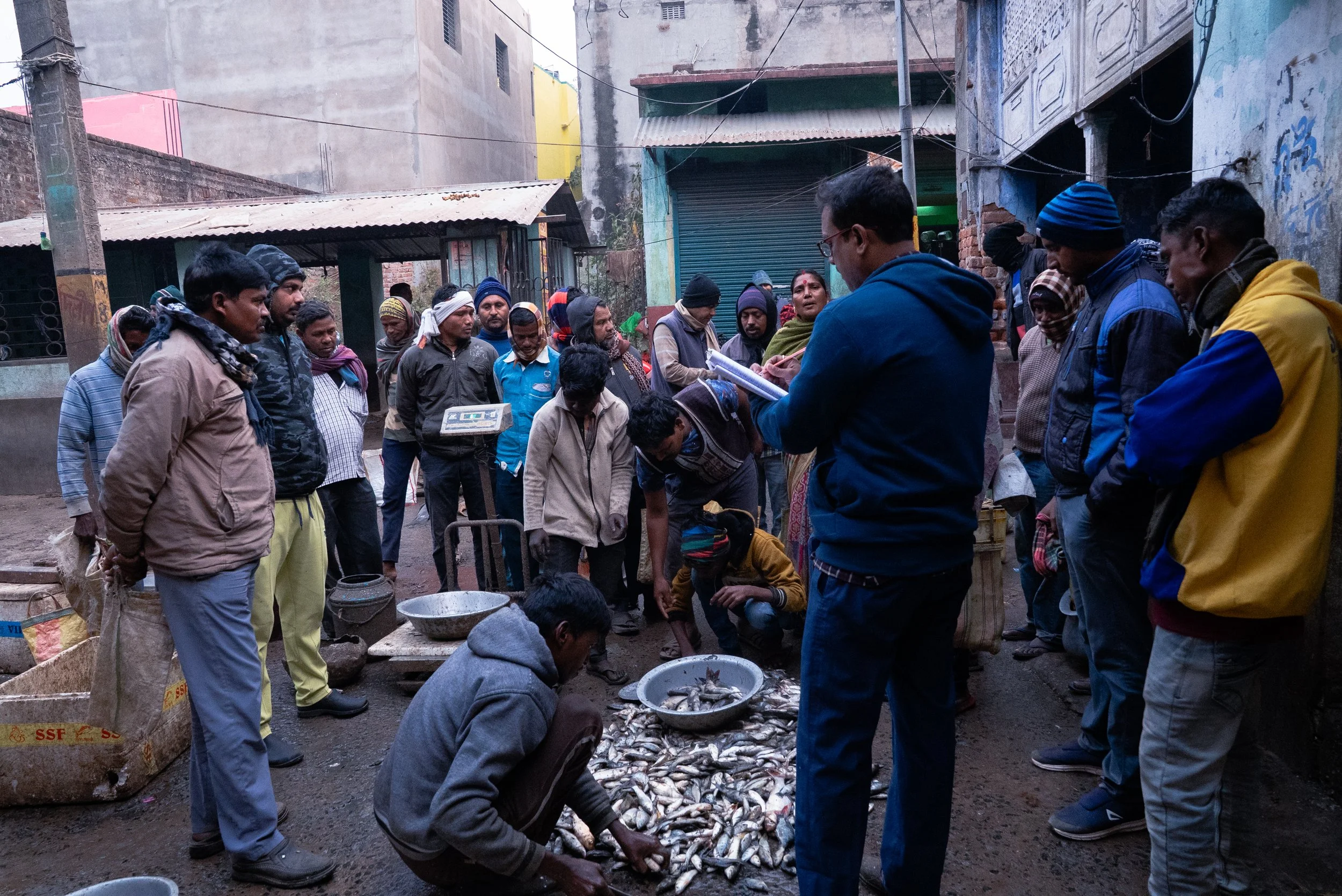
The auctions proceeds smoothly thanks to skilled assistants and collaborators who are employed to carry, sort, weigh and hand over the fish as the bids continue.
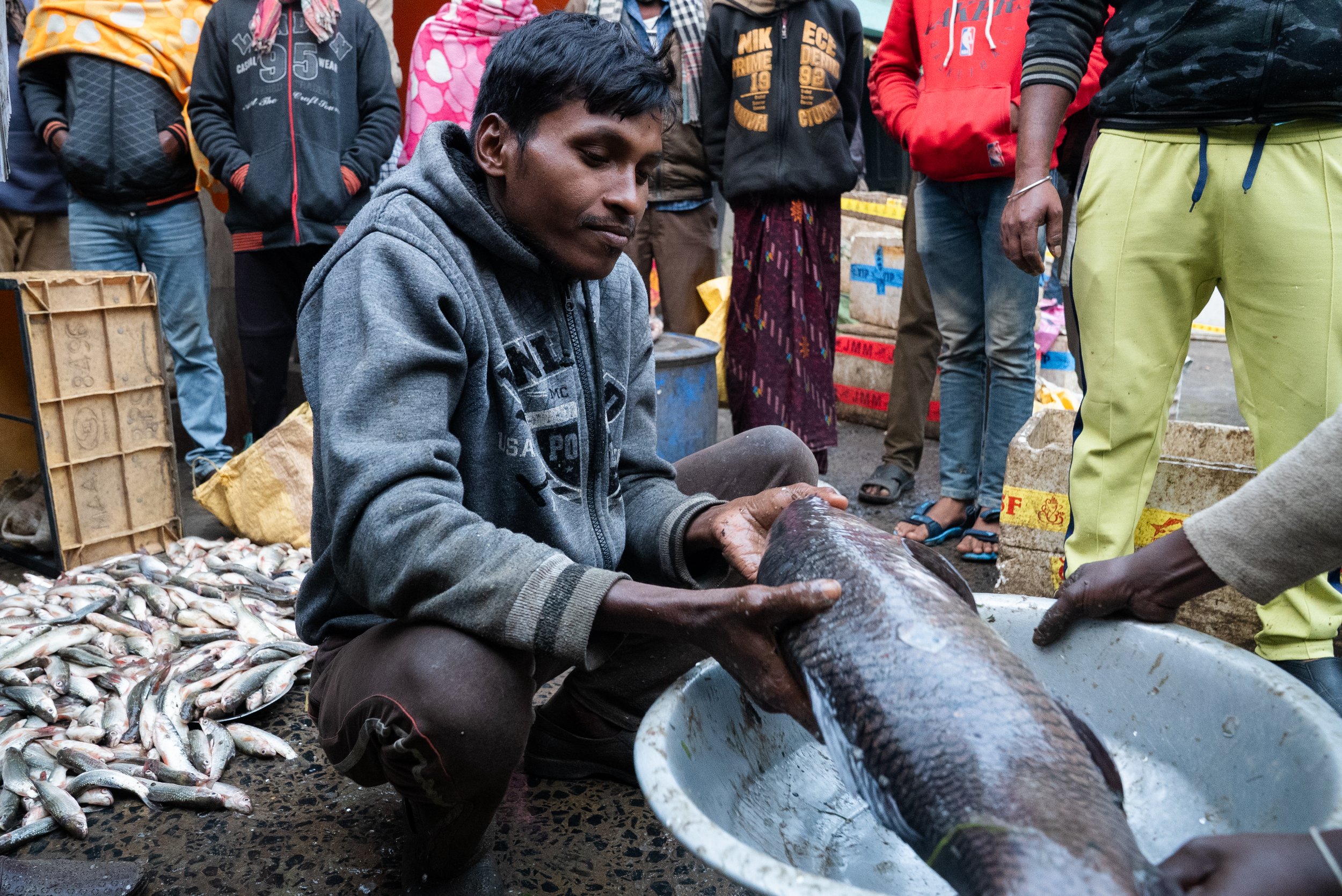
Shyamal Garai, 28, has been working as an auction assistant for seven years now.
“Initially, I couldn’t do it well. Now I’ve become better. I’ve learnt to identify the fish, their weights, and remember the people who buy.”
Shyamal also runs a phuchka stall nearby later in the day, like many others who work at the auctions in the mornings and then somewhere else later on.
“This is a job, that’s my own business.” He says fondly, about his stall. “But it used to be 9 in the morning by the time I woke up. It made me feel bad…lazy. Working here ensures I wake up by 5 am everyday.”
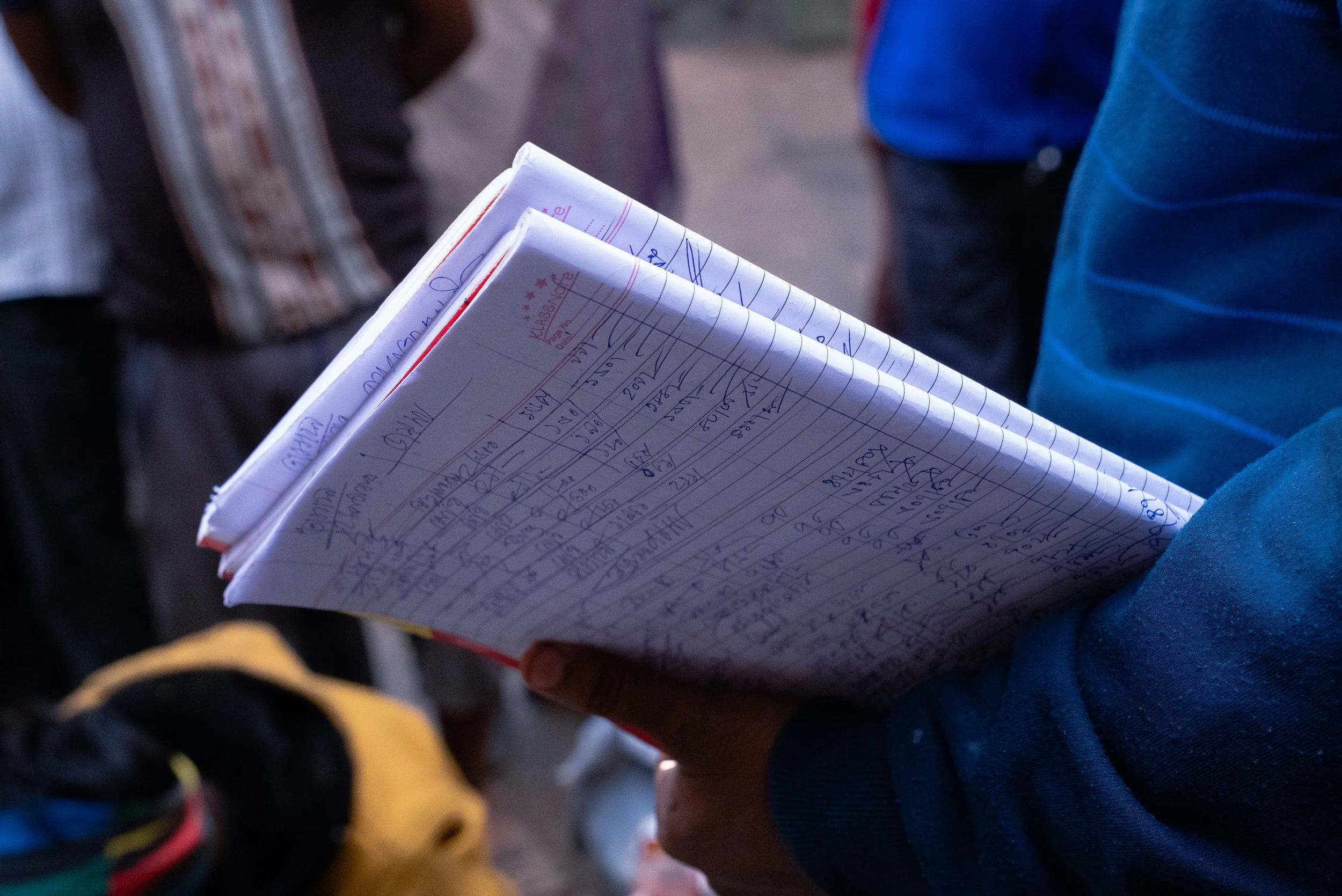
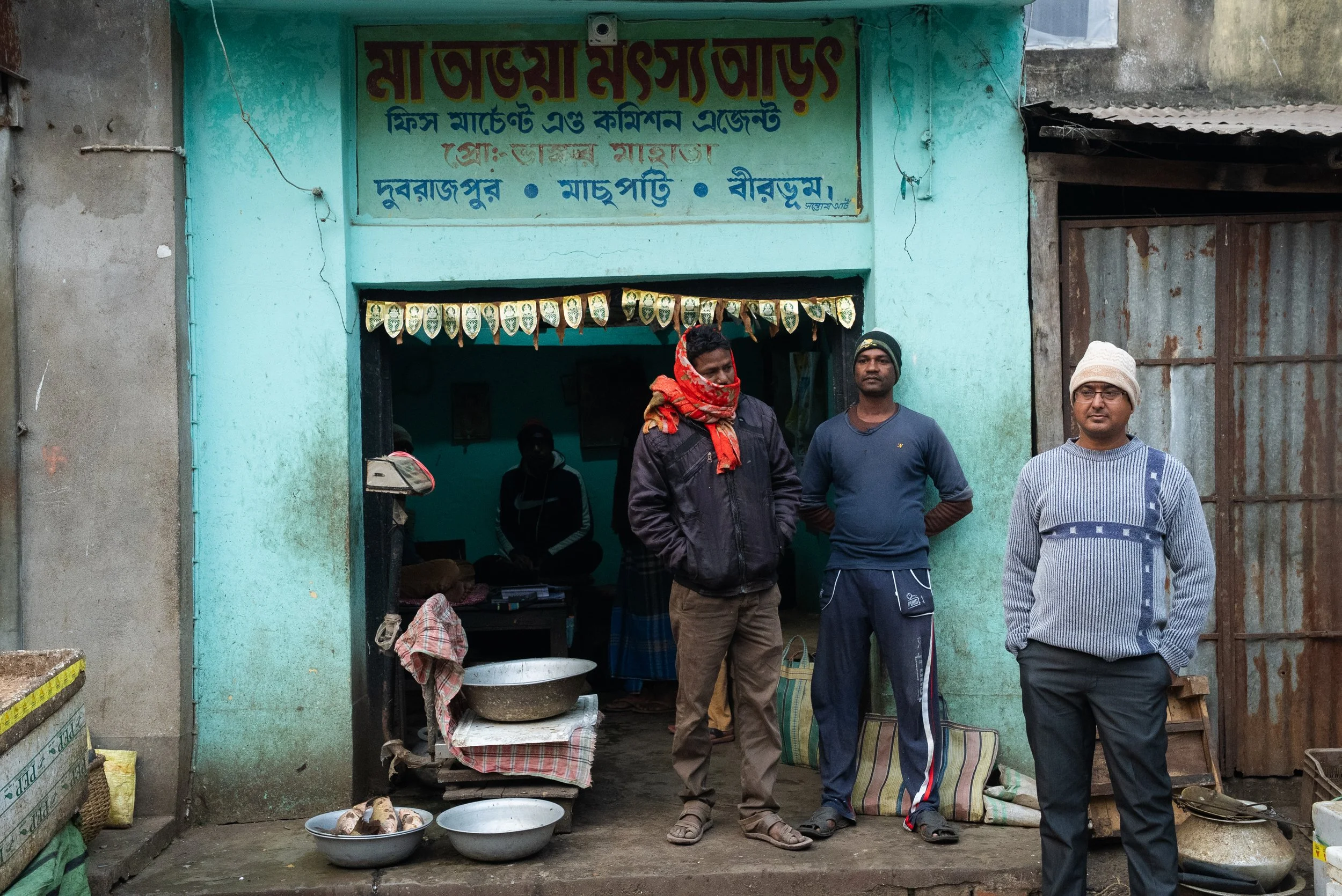
There are two other auction houses flanking the square, attracting smaller crowds - Maa Abhaya Matsya Aarat and Rakshakali Matsya Aarat. Sitting in the shop spaces away from the crowds, diligent accounting teams put down the day’s sales in their record books. There are separate books for debit and credit. In addition, CCTV cameras are installed at all three aarats, for security and to help detect mistakes in accounting.
Fishermen bringing in the catch are paid on the same day but the aarat allows buyers at the auction to defer payments if necessary until after they have sold their stock. Sometimes, the accountants admit, that they are owed money for months. In extreme cases, they resort to blacklisting the offender from the auction.
Bappa da’s aarat attracts the most crowds. According to some townsfolk, it appears that they have incentivised the fisherfolk in different villages around town by giving them advances of 5000 or sometimes 10,000 rupees saying they can take this loan and clear it later as long as they bring their fish only here. Other times, when the family member of a fisherman falls ill, they advance loans to cover the expenses. This way they have made sure that a majority of the catch gets sold through their auction. However, some observers and regular buyers hint that there are intimidation tactics at play, indicating a carrot and stick method of ensuring compliance.
“They’ll turn up at your house, make your life hell if you don’t pay up. I would guess people would pay them before time.” says a local homemaker.
The customers are comprised of both local fishmongers as well as townsfolk who prefer to buy their fish directly from the auctions.
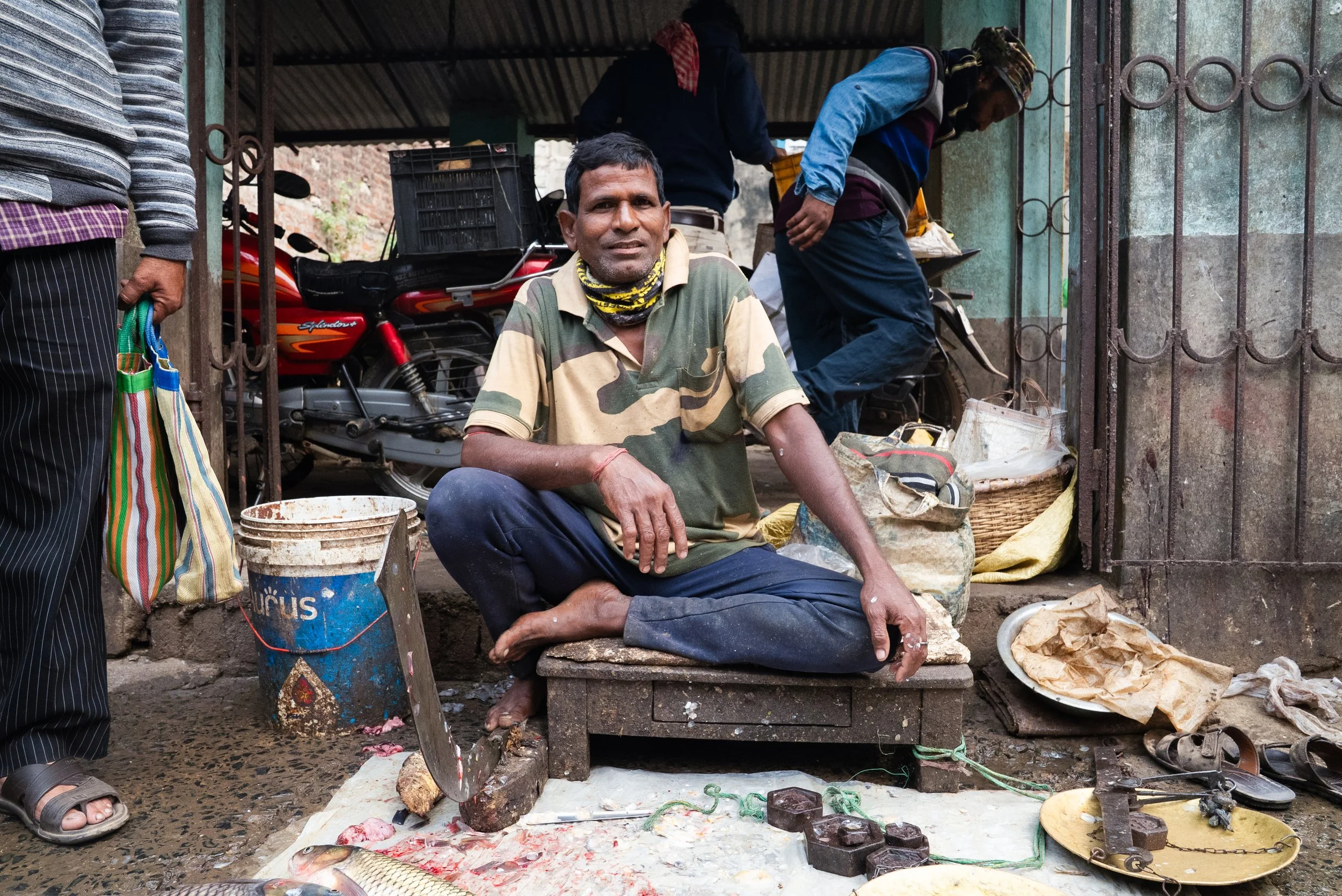
Once the auctions start winding down, some of the fishmongers set up shop within the square itself.
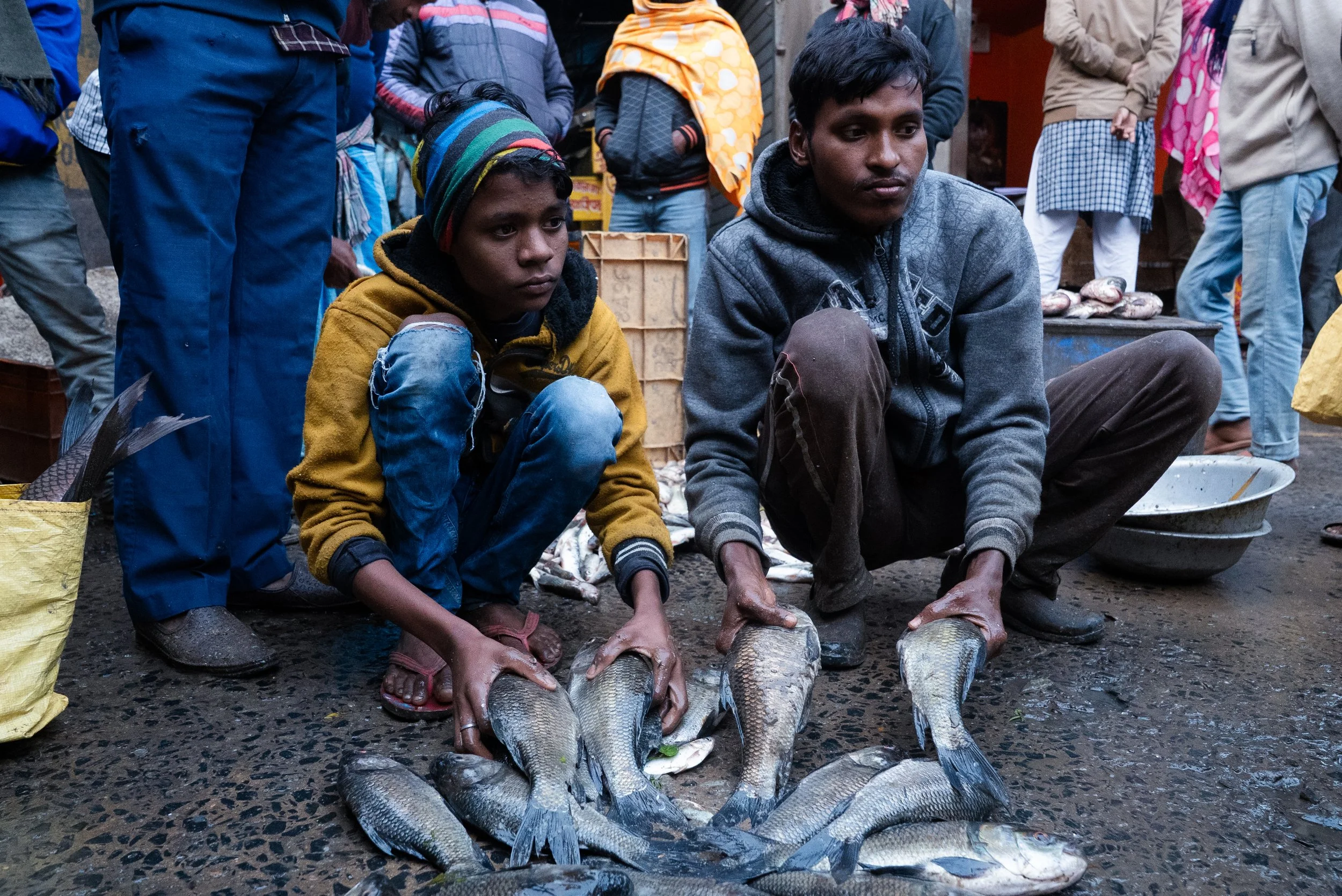
Among the fishmongers is Utpal Dhibar, who takes pride in selling the biggest fish he can find at the auction.
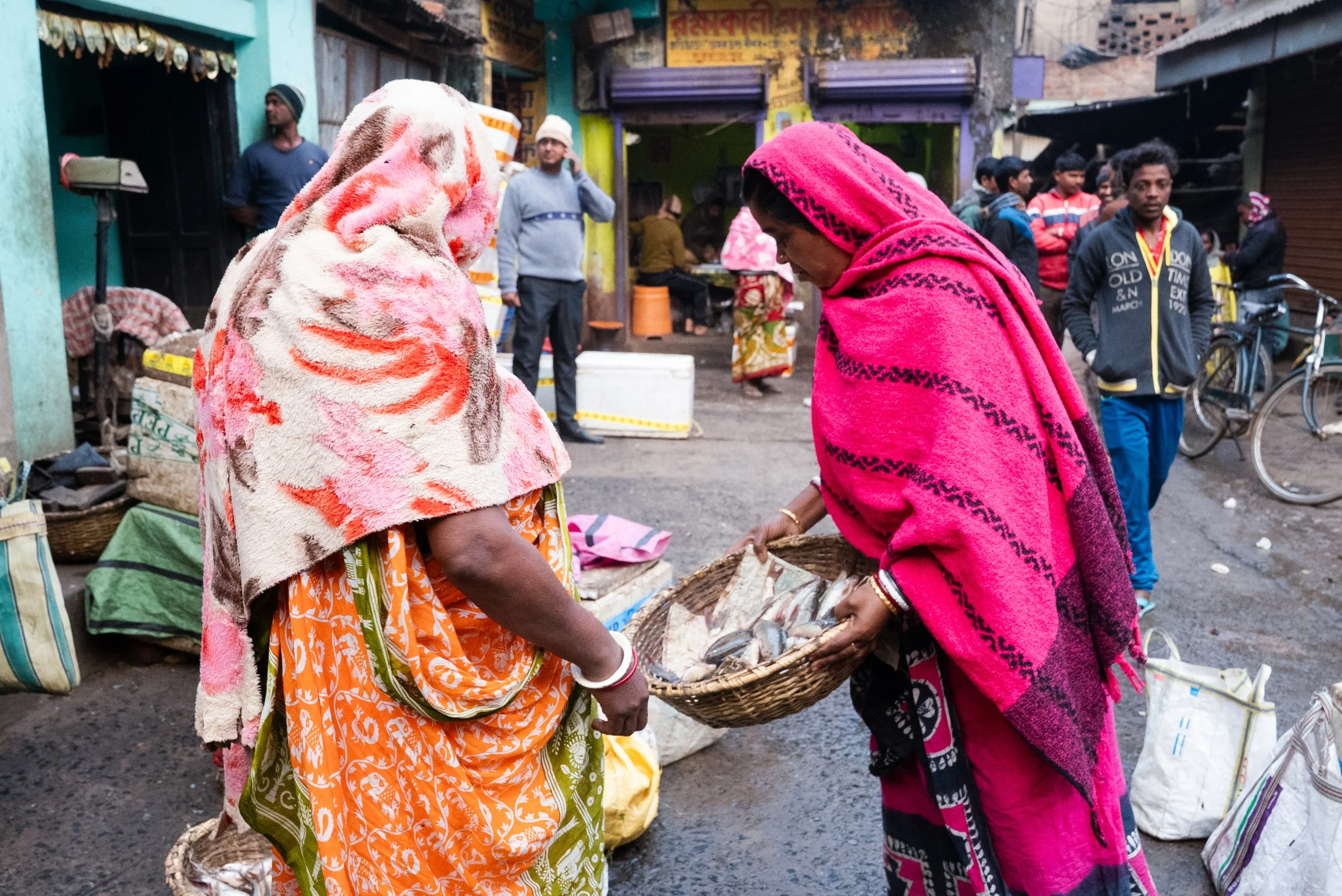
By around 9 am the auction wraps up and only the fishmongers who sell at the square remain, displaying their hauls. The days they can’t sell all their fish, they preserve unsold catch in ice boxes which will keep them fresh for a few more days, but not for long. Post-pandemic, business is still harder than usual, yet, for the sake of their livelihoods, they must adapt and carry on.
© 2026 Saranya Nayak. All rights reserved.
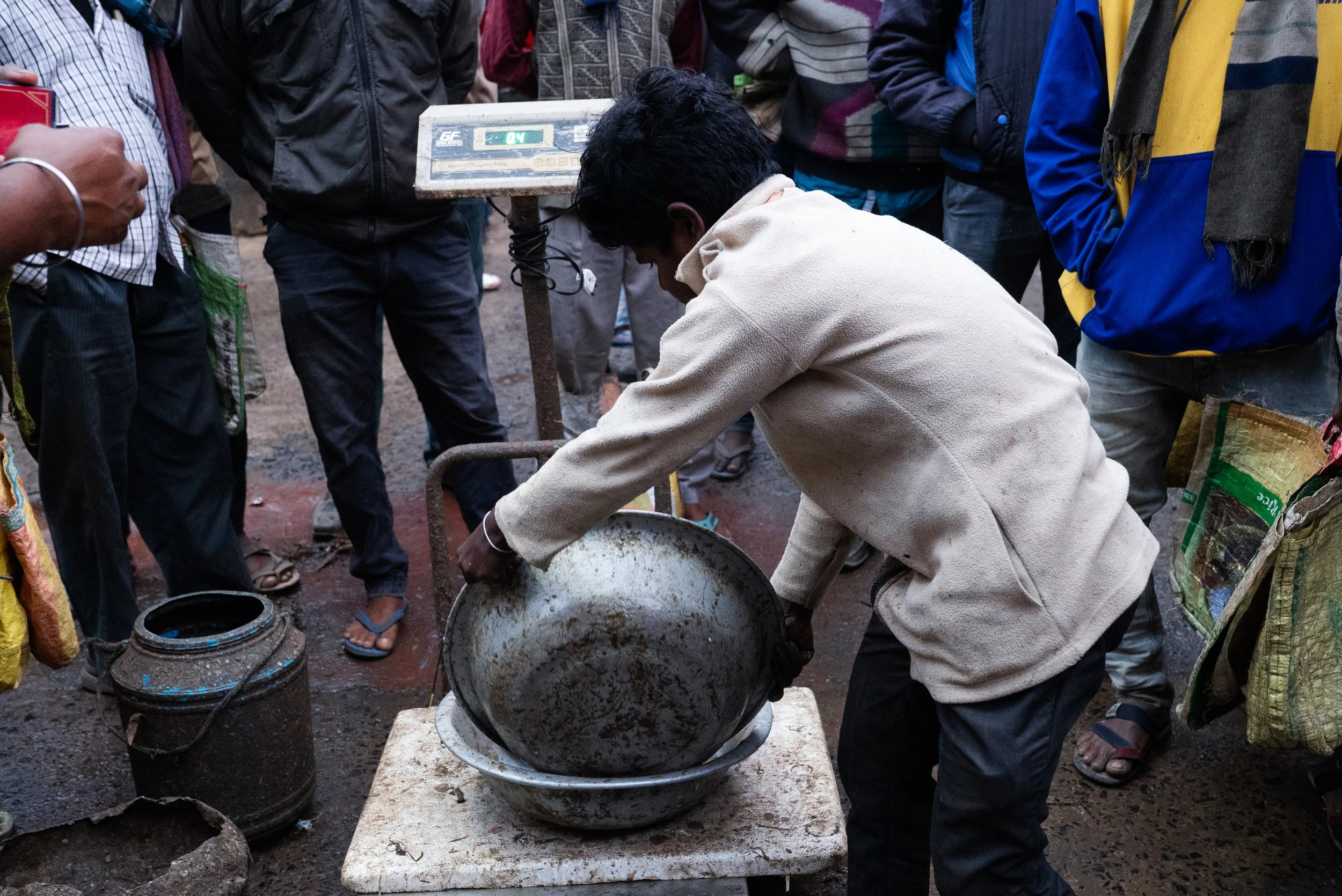
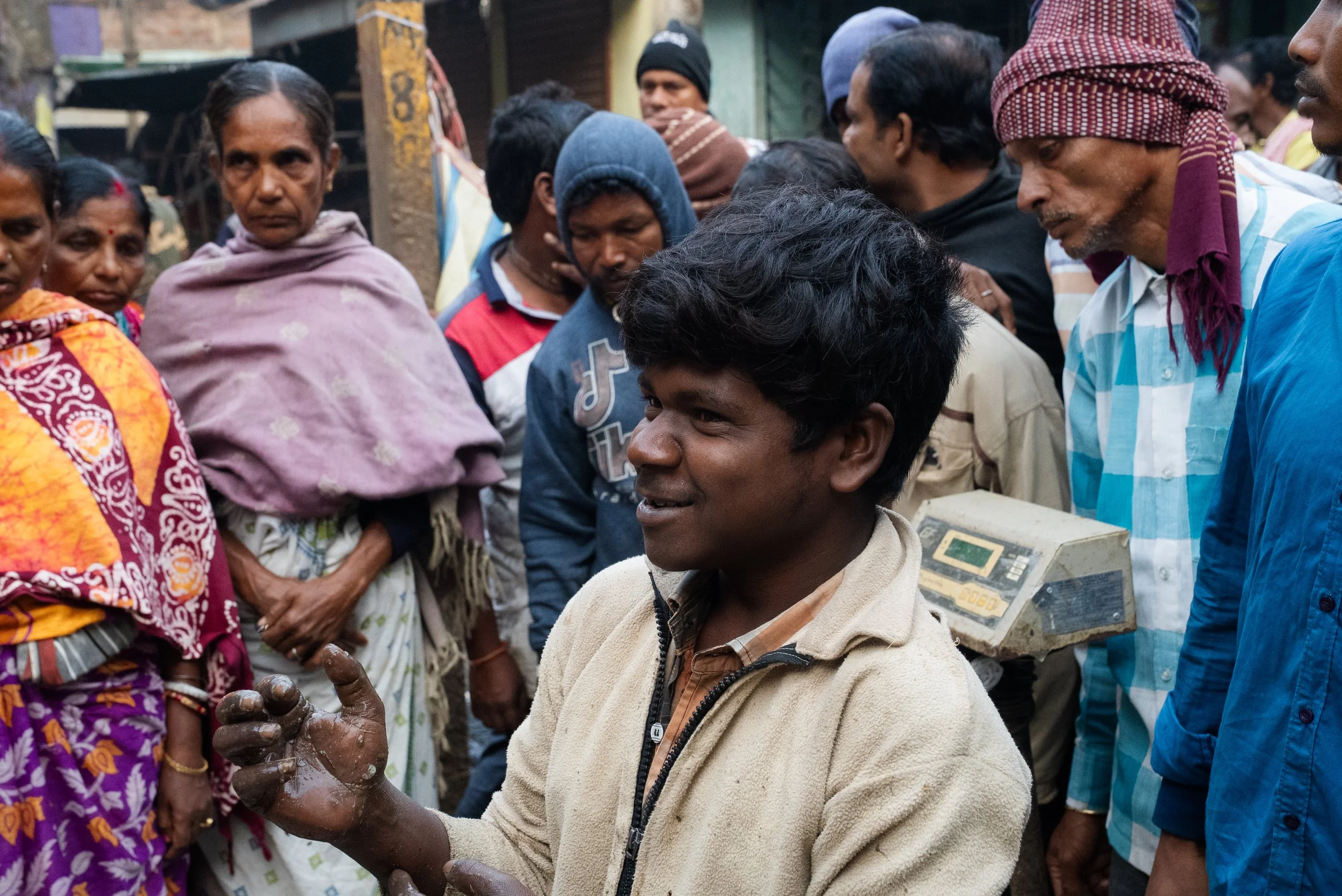
26-year-old Bapi Hajra is also an assistant. His job is to place the fish on the weighing scale and hand them over to the highest bidders.
Having lost his parents as a child, he started working in lieu of a school education. He has had this job for the last 5 years. He nods his head without expression when asked if he likes it. Like Shyamal, he receives a fixed salary of Rs. 100 per day.
“It’s okay enough for me, since I’m alone.” He says.
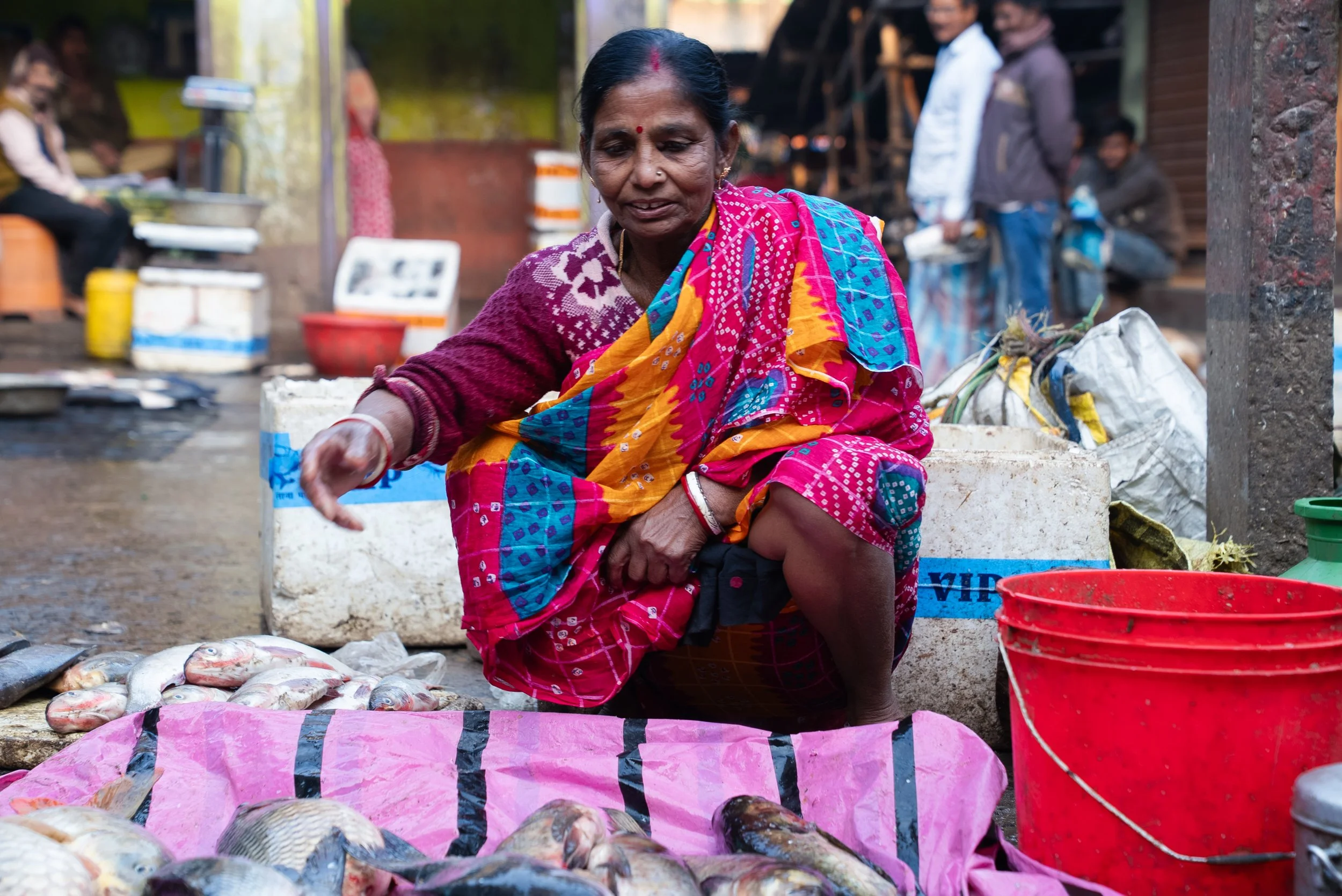
Close by, Bulu Dhibar lays out her fish on a bright pink and black striped tarpaulin sheet.
Around twenty five years ago, she had started out small with one to two kilograms of fish, watching and learning from other sellers. Nowadays, she usually buys 10-15 kilograms of whatever feels affordable at the auction.
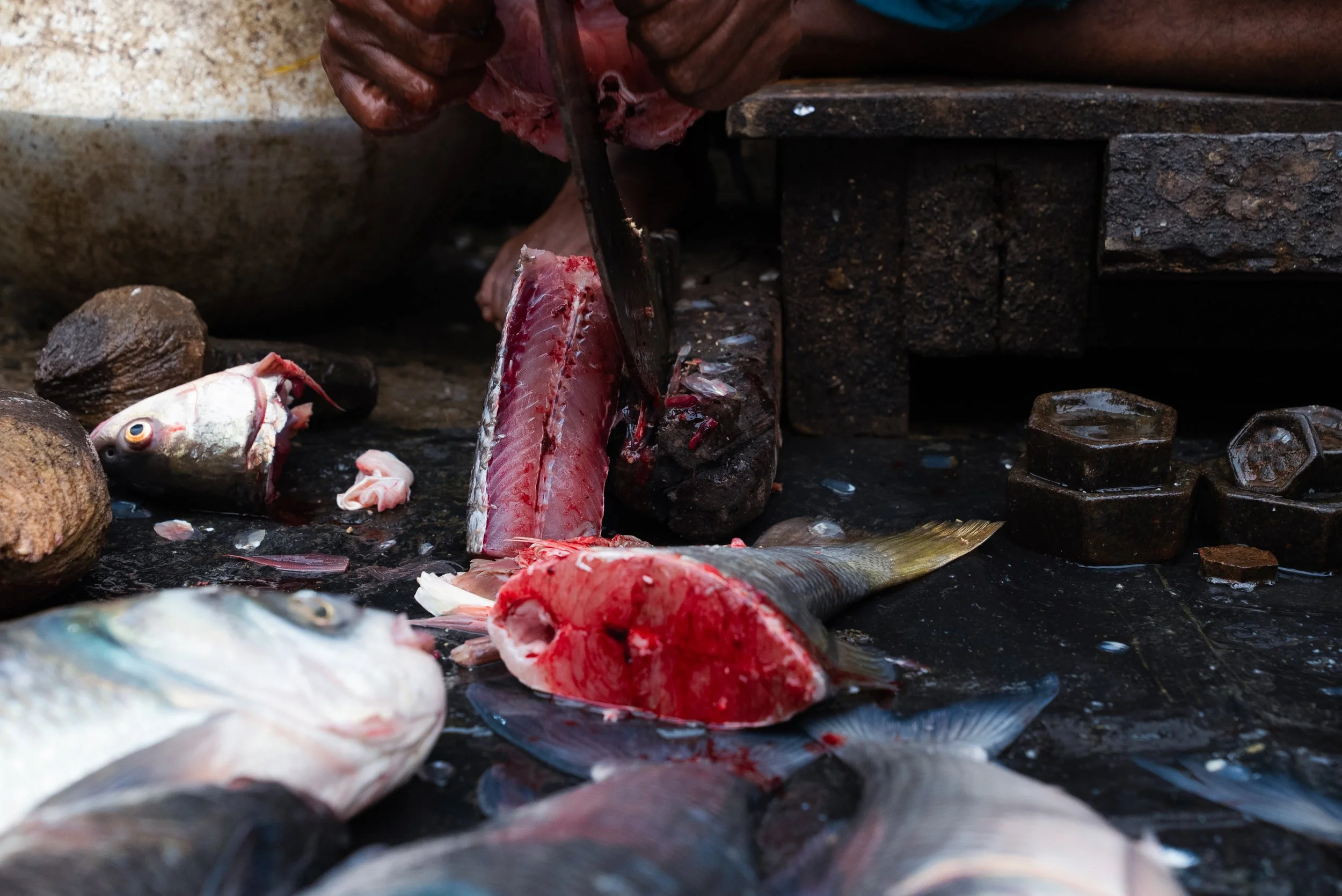
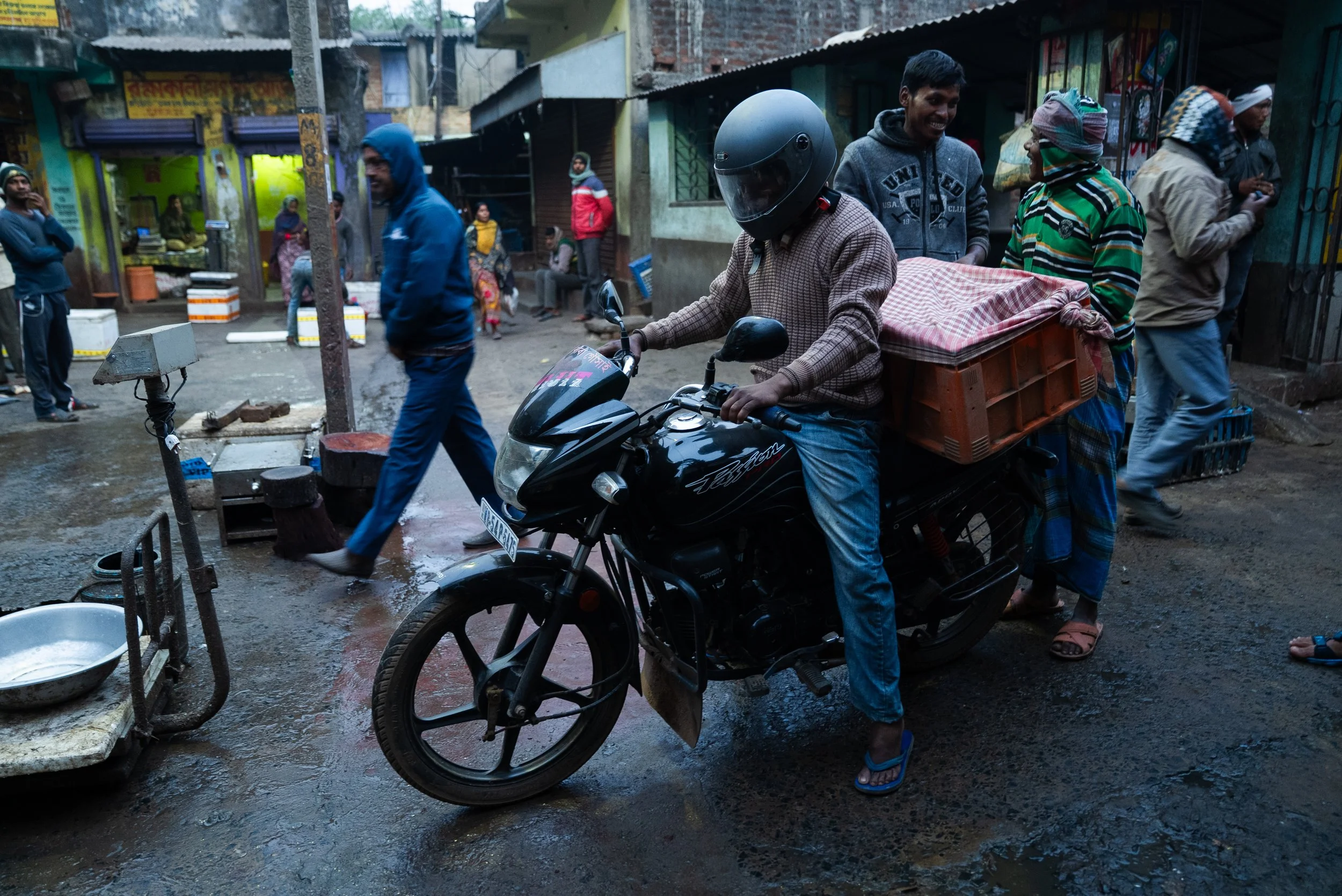
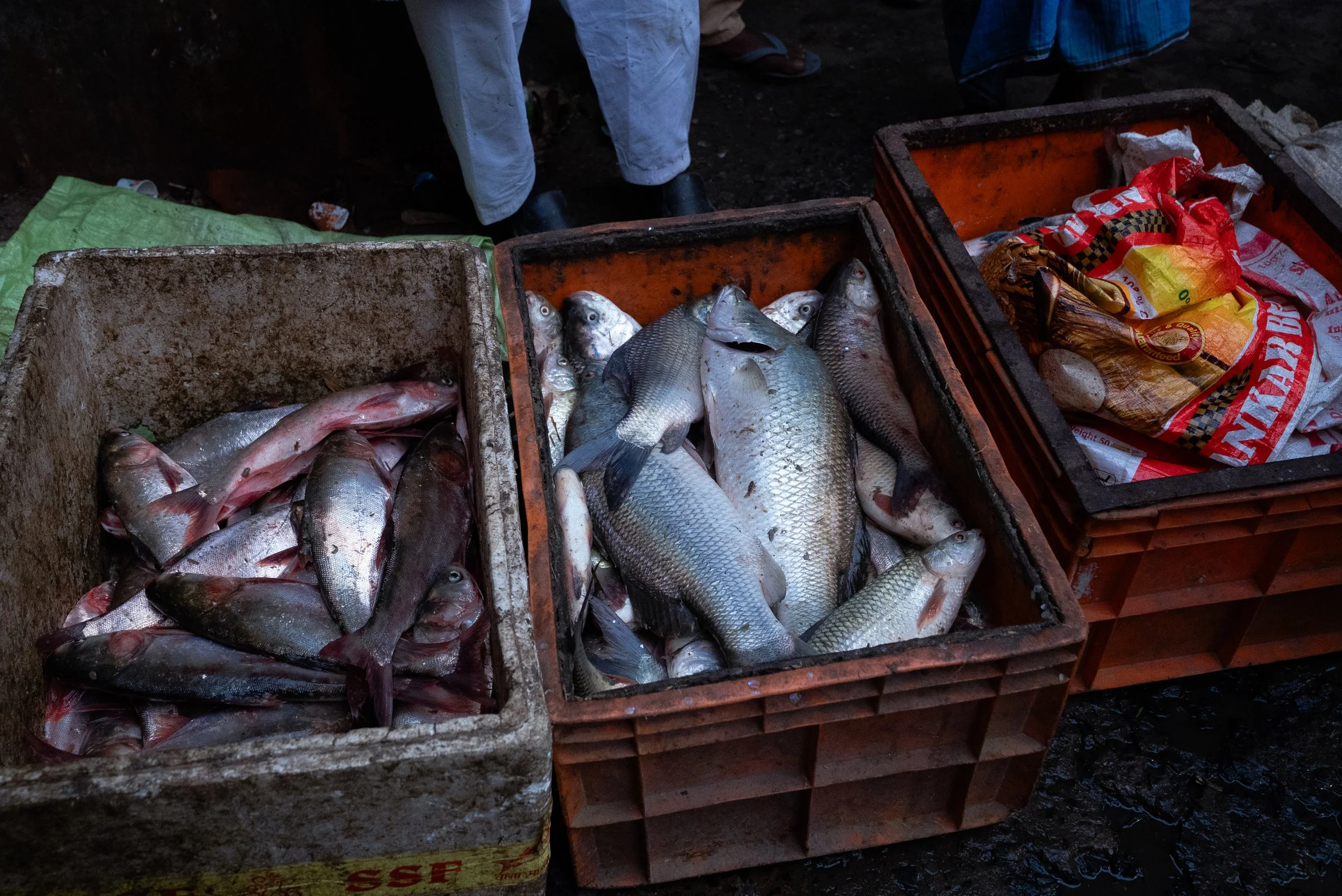
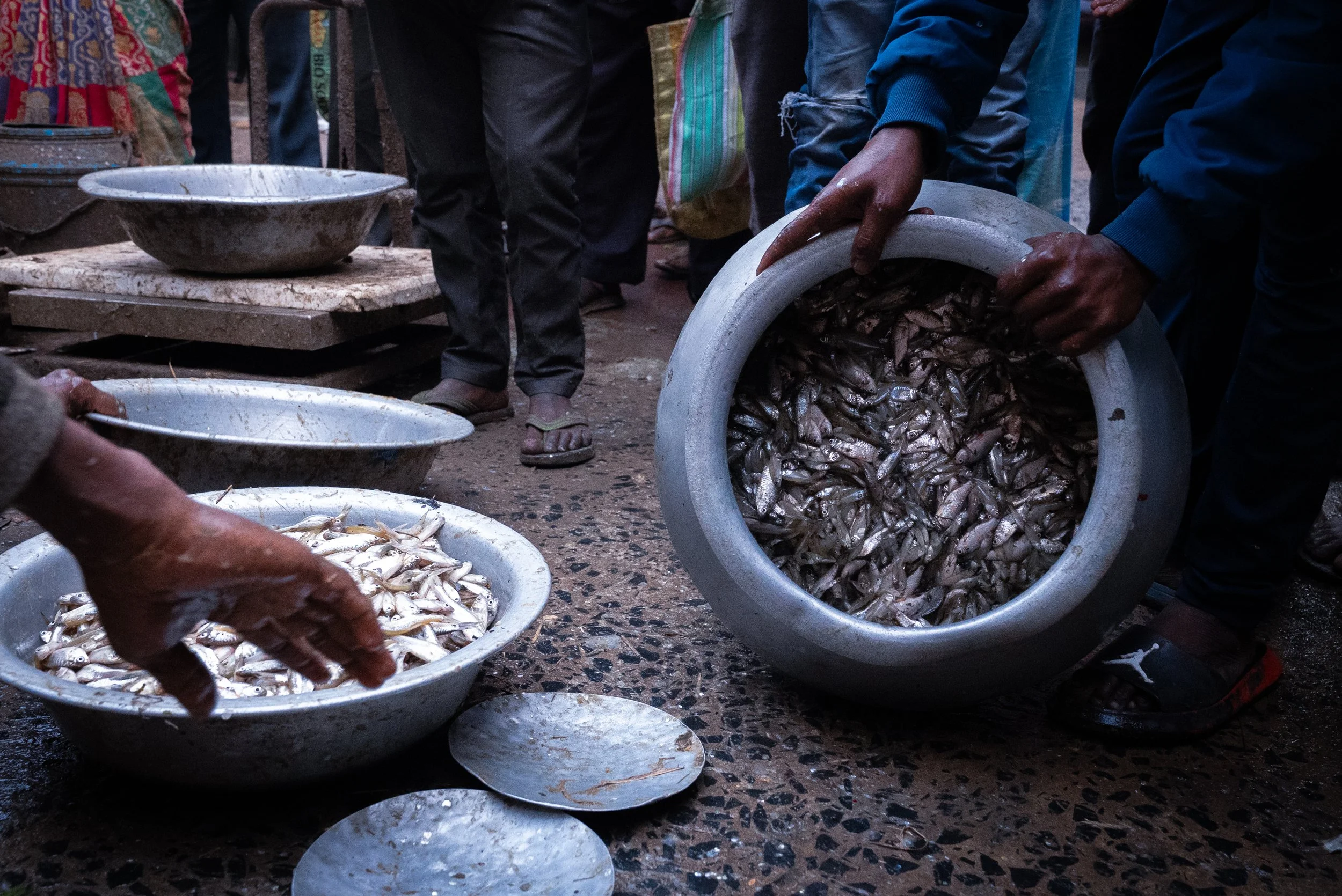
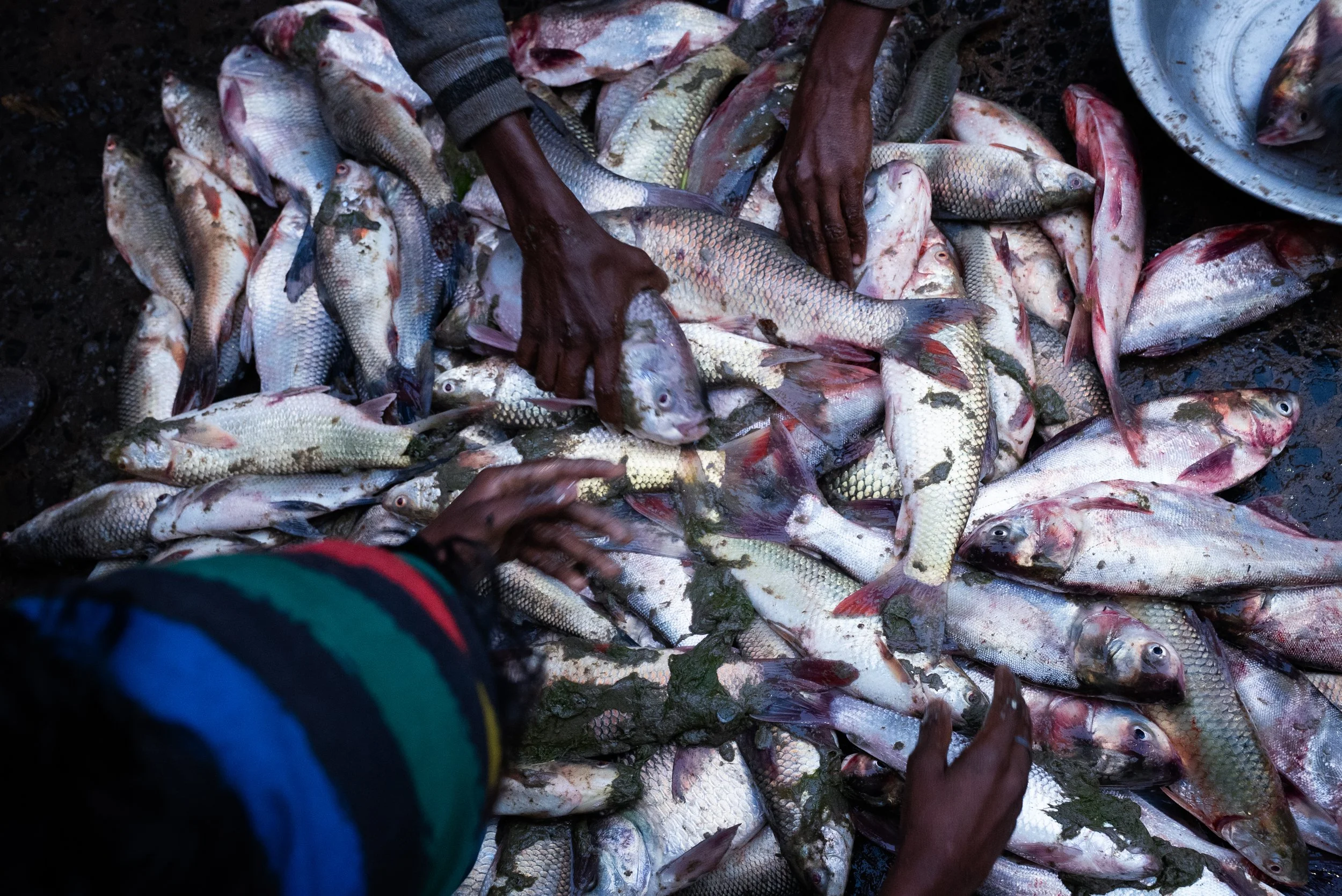
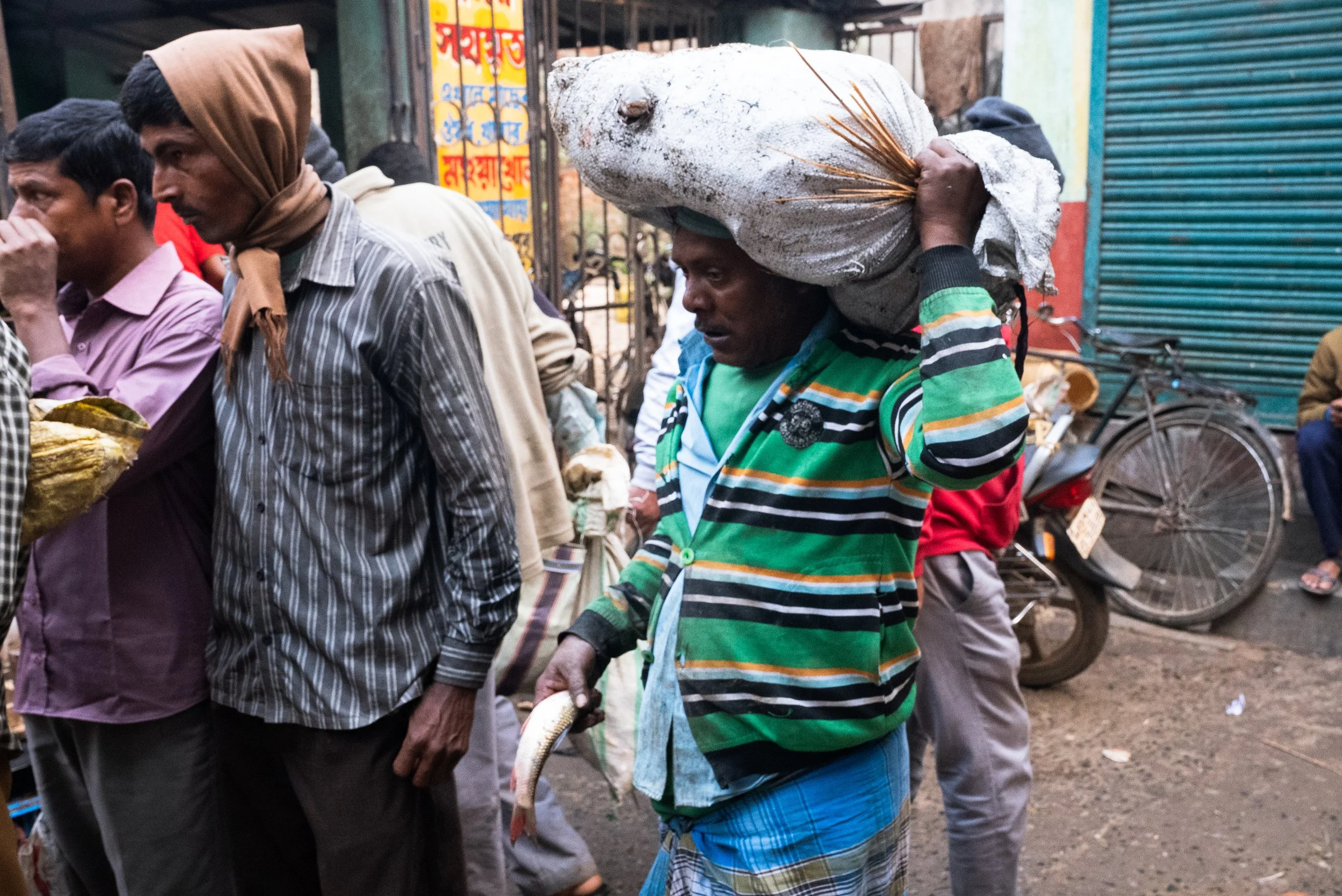
Mohammad Hamid is one of the earliest to arrive at the auction area. He wakes up at 3:30 am to make sure he can freshen up and get in by 4:30. His job is to bring down the fish from the vehicles parked outside on the street.
He has been working here for 15 years now and has two sons who are also daily wage labourers. Previously, he used to drive a rickshaw, but with the demand for rickshaw rides rapidly dwindling, he decided to switch to something more secure.
“The owner gives me food when I ask, and money if I’m sick.” He adds, when asked about the perks of his job.
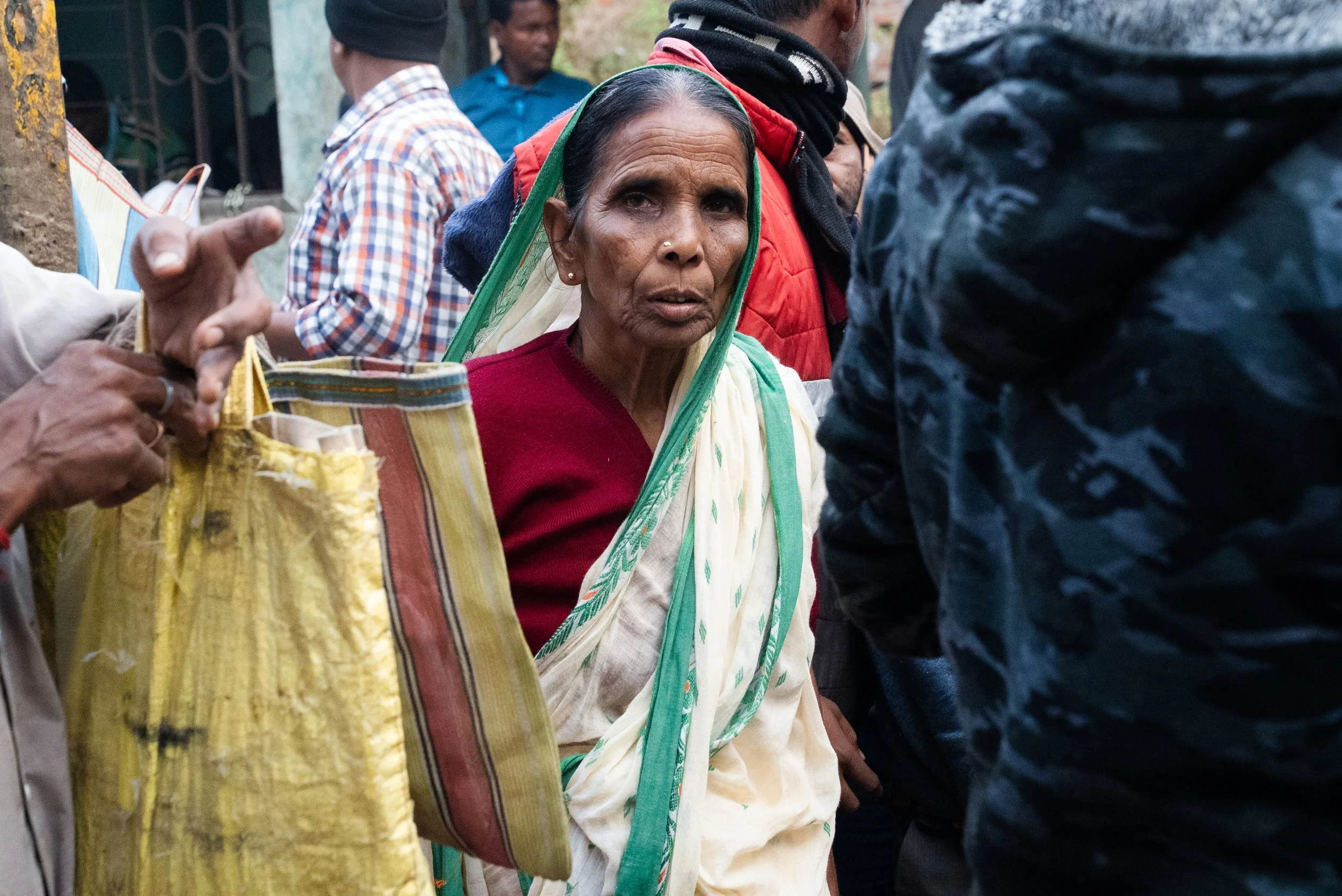
Lokkhi Hajra, on the other hand, goes from door to door selling the fish she has acquired from the auction. She usually sells the catch by weight, smaller ones fetching Rs. 120 per kilo while big fish can go upto Rs 150 or even 200.
Around 70 now, she laments that she is old and no longer able to carry much weight. The Covid-19 pandemic was hard on her. However, stopping work entirely isn’t an option. Her three sons are daily wage labourers who bring in a meagre income and she tries to supplement it as best as she can. Resigned to a life of scarcity, she wishes for an end to hard labour.
“God isn’t giving me the peace of death, though I don’t feel like living anymore.”